Introduction
The 1957 United States One Dollar Silver Certificate stands as an enduring reminder of a unique era in American monetary history. Unlike today’s Federal Reserve Notes, these certificates were once widely used and held special importance because they represented a promise from the United States government—redeemable for actual silver. Although no longer redeemable for precious metal, the 1957 silver certificate continues to fascinate collectors, historians, and anyone interested in numismatics, the study and collection of currency. This article offers a deep exploration of the origins, design, historical context, collectible value, and ongoing relevance of this remarkable piece of American financial heritage.
To fully appreciate the significance of the 1957 United States One Dollar Silver Certificate, it is essential to understand the broader story of silver certificates within the United States monetary system and the economic forces that shaped their creation and eventual discontinuation.
The Origins of Silver Certificates in the United States
Silver certificates in the United States began as a result of economic and political pressures in the late 19th century. Prior to the issuance of silver certificates, the American economy operated under a bimetallic standard, where both gold and silver played roles in backing the nation’s currency. However, changing market conditions and political pressures led to the decline of silver’s role in the monetary system. In response to agitation by citizens and policymakers who supported the use of silver, Congress passed legislation in the 1870s that authorized the issuance of silver certificates.
Silver certificates were a form of representative money—paper currency that could be exchanged for a fixed amount of silver. They were initially redeemable for silver dollar coins and later for silver bullion, offering an alternative to the heavy metal coins that were cumbersome to handle and transport.
Over the decades, silver certificates became a familiar part of everyday commerce in the United States, circulating alongside other types of currency such as gold certificates and Federal Reserve Notes. However, as monetary policy continued to evolve, the role of silver certificates shifted and eventually diminished by the mid-20th century.
What Made the 1957 Series Special?
Design and Features
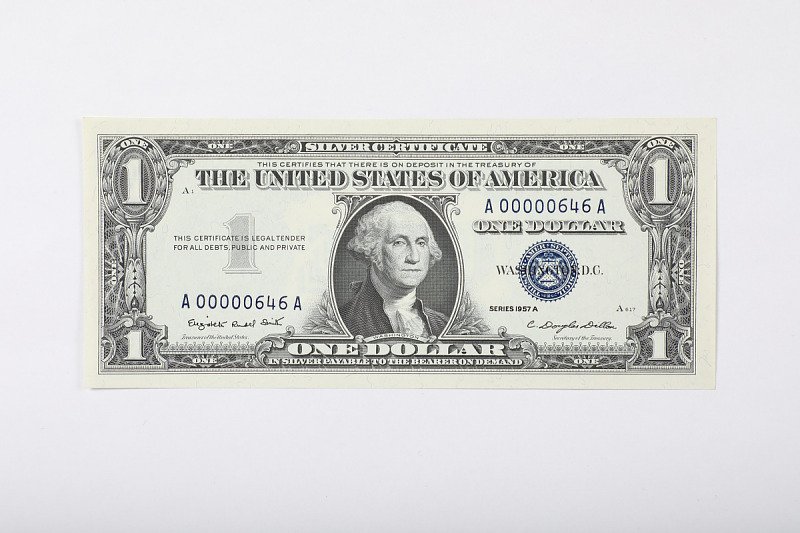
The 1957 United States One Dollar Silver Certificate is part of the final series of silver certificates issued in the United States. These certificates featured familiar design elements that are recognizable even today:
- Portrait of George Washington: Centered on the obverse (front) of the note, honoring the first President of the United States.
- Distinctive Wording: Across the top of the note, the words “Silver Certificate” proclaimed that the note was backed by silver held by the U.S. Treasury.
- Promise of Redemption: The note contained text indicating that it could be redeemed for one dollar in silver upon demand—an important distinction from Federal Reserve Notes.
- Great Seal of the United States: Featured prominently on the reverse, reinforcing its official status as government-issued currency.
What truly set the 1957 series apart was that it was one of the last issued before silver certificates were phased out entirely. These certificates carry a historical weight that reflects the end of silver-backed paper currency in U.S. history.
Legal and Monetary Context
By the mid-20th century, changes in the global economy and the rising price of silver made it increasingly difficult for the U.S. Treasury to maintain silver reserves large enough to cover the redemption of certificates. These economic pressures, coupled with legislative actions, ultimately led to the discontinuation of silver certificate issuance.
Despite these changes, the 1957 United States One Dollar Silver Certificate remains legal tender. It can still be exchanged at face value for current Federal Reserve Notes, though its historical and collectible value often exceeds the original $1 face value for enthusiasts and collectors.
Historical Significance of 1957 Silver Certificates
The 1957 United States One Dollar Silver Certificate holds significant historical importance for several reasons:
1. Culmination of Silver Certificate Era
The 1957 series represents one of the final chapters in the long story of silver-backed paper currency in the United States—a system that began in the late 19th century and persisted for nearly a century.