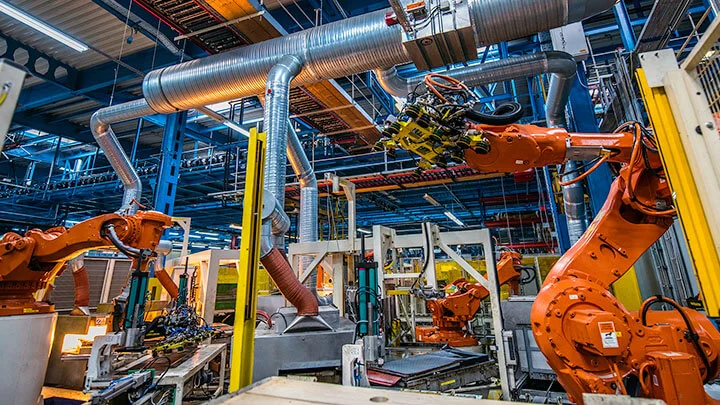
Introduction
In the modern industrial and economic landscape, production relies heavily on machines, tools, and systems that enable large-scale manufacturing and service delivery. Among these essential components, Industrial Equipment plays a central role in shaping productivity, efficiency, and overall economic growth.
Table of Contents
ToggleWhen asking the question “industrial equipment is an example of a?”, the correct and most widely accepted answer in economics and business studies is that it is an example of capital goods. These are assets used in the production of other goods and services rather than being consumed directly by individuals.
This article provides a deep and comprehensive explanation of what Industrial Equipment represents, how it functions in production systems, its economic classification, types, importance, and real-world applications. It also explores related economic concepts, making it easier for students, professionals, and researchers to understand its significance.
Understanding the Concept of Industrial Equipment
To understand the classification of Industrial Equipment, we must first define what it includes. Industrial equipment refers to machinery, tools, devices, and systems used in manufacturing, construction, energy production, agriculture, and other industrial sectors.
Examples include:
- Heavy machinery like excavators and bulldozers
- Manufacturing machines such as CNC machines
- Conveyor systems in factories
- Power generators and turbines
- Packaging and assembly line equipment
These tools are not consumed directly by individuals but are used to produce consumer goods and services. This makes Industrial Equipment a critical foundation of modern economies.
Industrial Equipment As Capital Goods
The most important classification of Industrial Equipment in economics is that it is a form of capital goods.
Capital goods are assets used in the production of other goods rather than for final consumption. They are different from consumer goods, which are purchased for personal use.
Key Characteristics of Capital Goods
- They are used in production processes
- They have long-term usage value
- They contribute to economic productivity
- They are not directly consumed by individuals
- They require investment and maintenance
Since Industrial Equipment meets all these criteria, it is correctly categorized as capital goods.
Thus, when answering the question “industrial equipment is an example of a?”, the accurate answer is:
👉 Capital goods
Importance of Industrial Equipment in Modern Economy
Modern economies depend heavily on efficient production systems, and Industrial Equipment is at the heart of these systems.
1. Increases Production Efficiency
Machines and automated systems reduce manual labor and increase output speed. Factories equipped with advanced equipment can produce thousands of units in a short time.
2. Enhances Product Quality
Precision machinery ensures consistent quality in manufacturing processes, reducing defects and waste.
3. Supports Large-Scale Production
Without Industrial Equipment, mass production would not be possible. Industries such as automotive, textiles, and electronics depend heavily on machinery.
4. Drives Economic Growth
Countries with strong industrial bases and modern equipment tend to have higher GDP growth due to increased productivity.
5. Creates Employment Opportunities
Although automation reduces some manual tasks, it creates skilled job opportunities in engineering, maintenance, and operations.
Types of Industrial Equipment
Industrial Equipment can be categorized based on usage and industry requirements.
Manufacturing Equipment
Used in factories for production processes.
- CNC machines
- Injection molding machines
- Welding machines
- Robotic arms
Construction Equipment
Used in building infrastructure.
- Cranes
- Excavators
- Concrete mixers
- Loaders
Energy Production Equipment
Used in generating and distributing energy.
- Turbines
- Generators
- Transformers
- Solar panel systems
Agricultural Equipment
Used in farming and food production.
- Tractors
- Harvesters
- Irrigation systems
- Plowing machines
Material Handling Equipment
Used for transporting materials within industrial settings.
- Forklifts
- Conveyor belts
- Storage systems
- Cranes
Each category of Industrial Equipment plays a unique role in supporting industrial development.
Economic Role of Industrial Equipment
From an economic perspective, Industrial Equipment contributes significantly to production capacity and industrial expansion.
Fixed Asset Classification
In accounting and finance, Industrial Equipment is considered a fixed asset because:
- It is used for long-term operations
- It depreciates over time
- It generates economic value over multiple years
Contribution to Industrial Output
Industries with advanced machinery produce higher output levels, which increases supply in the market and stabilizes prices.
Investment Indicator
High investment in Industrial Equipment reflects industrial growth and economic development in a country.
Industrial Equipment and Technological Advancement
Technology has transformed the nature of Industrial Equipment over the years.
Automation and Robotics
Modern factories now use robotic systems that perform tasks with high precision and speed.
Artificial Intelligence Integration
AI-powered machines can analyze production data and optimize performance.
Smart Manufacturing Systems
Connected devices and sensors allow real-time monitoring of production lines.
Energy Efficiency Improvements
New equipment is designed to reduce energy consumption and environmental impact.
These advancements make Industrial Equipment more efficient and sustainable than ever before.
Maintenance and Lifecycle of Industrial Equipment
Proper maintenance is essential for ensuring long-term performance.
Stages of Equipment Lifecycle
- Procurement and installation
- Operation and usage
- Maintenance and servicing
- Upgradation or replacement
Importance of Maintenance
- Prevents breakdowns
- Reduces operational costs
- Extends equipment lifespan
- Improves safety
Well-maintained Industrial Equipment ensures smooth production and reduces downtime.
Industrial Equipment in Different Sectors
Manufacturing Sector
Factories depend on machinery for mass production of goods like clothing, electronics, and vehicles.
Construction Sector
Heavy machines are used to build roads, bridges, and buildings.
Agriculture Sector
Modern farming equipment increases crop yield and reduces manual labor.
Healthcare Sector
Medical devices such as MRI machines and surgical tools are also considered specialized Industrial Equipment.
Transportation Sector
Equipment used in logistics and transport helps move goods efficiently across regions.
Advantages of Industrial Equipment
The use of Industrial Equipment provides multiple benefits:
- Higher productivity
- Reduced labor dependency
- Improved accuracy
- Faster production cycles
- Better resource utilization
These advantages make it essential for modern industrial systems.
Challenges Associated with Industrial Equipment
Despite its benefits, there are challenges involved.
High Initial Investment
Purchasing machinery requires significant capital.
Maintenance Costs
Regular servicing and repairs can be expensive.
Skill Requirements
Operators need technical training to handle advanced machines.
Depreciation
Over time, equipment loses value and efficiency.
Environmental Concerns
Some machines consume high energy and may produce emissions.
Addressing these challenges is essential for sustainable industrial development.
Industrial Equipment and Global Trade
Industrial Equipment also plays a major role in international trade.
Countries export machinery and import advanced equipment to improve their industries. This global exchange supports economic cooperation and industrial development.
Developed countries often export high-tech machinery, while developing countries import them to enhance productivity.
Future of Industrial Equipment
The future of Industrial Equipment is shaped by innovation and sustainability.
Smart Factories
Fully automated factories will rely on interconnected machines.
Green Technology
Future equipment will focus on reducing environmental impact.
Digital Manufacturing
3D printing and digital systems will transform production processes.
AI-Based Optimization
Artificial intelligence will manage production with minimal human intervention.
These developments will make Industrial Equipment even more important in the coming decades.
Related Keywords
- Capital goods definition
- Manufacturing machinery
- Industrial machinery examples
- Fixed assets in economics
- Production equipment systems
- Heavy machinery types
- Industrial automation systems
- Factory equipment list
- Economic production tools
- Industrial development equipment
Conclusion
In conclusion, Industrial Equipment is a fundamental component of modern industrial systems and is classified as capital goods in economics. It plays a crucial role in production, efficiency, and economic growth across multiple sectors.
From manufacturing and construction to agriculture and energy, Industrial Equipment supports every major industry. Its importance continues to grow with technological advancement, automation, and global industrial expansion.