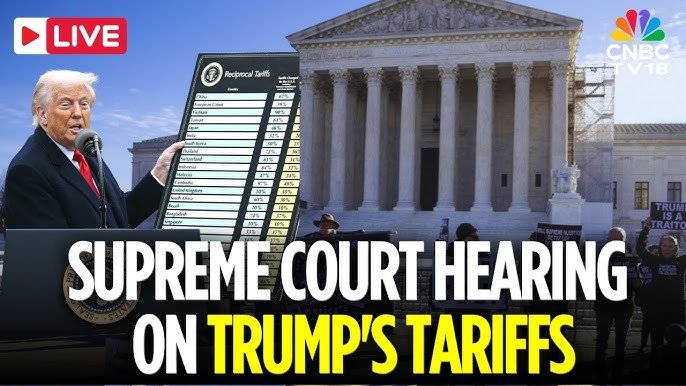
Introduction
The possibility that Donald Trump may personally attend a Supreme Court Hearing On His Tariffs has captured national and international attention. This unusual scenario blends legal drama with political strategy, raising important questions about presidential authority, economic policy, and judicial oversight.
Tariffs have long been a tool of economic protection and negotiation, but their use under Trump’s administration triggered both praise and criticism. Now, as legal challenges move toward the highest court in the United States, the stakes are higher than ever. The idea of a former president attending such a hearing adds another layer of significance, making this moment historic.
This article explores the background of the tariffs, the legal arguments, the role of the Supreme Court of the United States, and the broader implications of this unfolding situation.
Background of Trump’s Tariff Policies
The Rise of Tariff-Based Trade Strategy
During his presidency, Donald Trump made tariffs a central part of his economic strategy. His administration imposed tariffs on imports from several countries, particularly focusing on China. The goal was to reduce trade deficits, protect domestic industries, and encourage local manufacturing.
Trump justified these actions using national security arguments under laws like the Trade Expansion Act. This approach allowed him to bypass Congress in certain cases, giving the executive branch more control over trade decisions.
Controversy and Opposition
While some industries benefited, others faced higher costs and disruptions. Businesses reliant on imports struggled, and retaliatory tariffs from other nations affected American exports.
Legal experts and lawmakers began questioning whether Trump had exceeded his authority. This eventually led to lawsuits challenging the legality of these tariffs, paving the way for a potential Supreme Court Hearing On His Tariffs.
Legal Challenges to the Tariffs
Core Arguments Against the Tariffs
Opponents argue that Trump misused national security provisions to justify tariffs that were primarily economic in nature. They claim:
- The tariffs were not truly about national security
- The executive branch overstepped its authority
- Congress should have had a greater role
These arguments form the foundation of the legal battle now reaching the Supreme Court.
Defense of the Tariff Policies
Supporters of Trump’s policies argue that the law gives the president broad discretion in matters of trade and national security. They believe:
- The tariffs were necessary to protect American industries
- The president acted within legal boundaries
- Judicial interference could weaken executive power
This clash of interpretations is exactly what the Supreme Court Hearing On His Tariffs aims to resolve.
Role of the Supreme Court
Why This Case Matters
The Supreme Court rarely hears cases directly involving presidential trade powers. This makes the situation particularly significant. The court’s decision could redefine the limits of executive authority in economic matters.
Potential Legal Questions
The court may consider:
- What qualifies as a national security threat
- How much power the president has in trade policy
- Whether courts can review such decisions
The outcome of the Supreme Court Hearing On His Tariffs could influence future administrations for decades.
Trump’s Possible Attendance: Why It Matters
A Rare Move
It is uncommon for a former president to attend a Supreme Court hearing, especially one involving their own policies. If Trump appears, it would be a highly symbolic moment.
Political Messaging
Trump’s attendance could serve several purposes:
- Demonstrating confidence in his policies
- Rallying supporters
- Drawing media attention
This move would not only impact legal proceedings but also shape public perception of the case.