






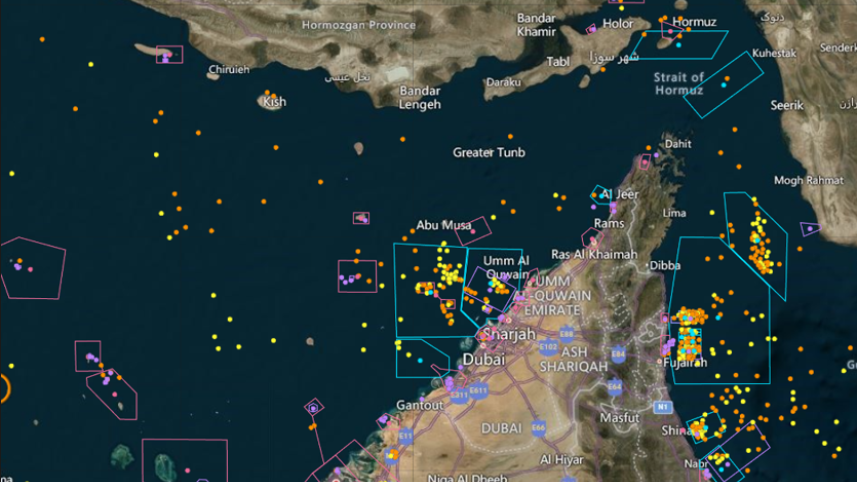
In the intricate web of global energy security, few chokepoints command as much geopolitical and economic significance as the Strait of Hormuz. Connecting the Persian Gulf with the Gulf of Oman and the Arabian Sea, this narrow waterway serves as the lifeblood for a substantial portion of the world’s crude oil and natural gas. For decades, analysts and policymakers have grappled with the potential consequences of a disruption here, focusing intently on the Strait of Hormuz closure risk oil impact, a scenario that could send shockwaves through every interconnected market on the planet. Understanding this risk is not merely an exercise in geopolitical forecasting; it is essential for grasping the fragility of modern supply chains, the volatility of energy prices, and the delicate balance of international relations that underpins global economic activity.
Table of Contents
ToggleThe Geographical and Geopolitical Significance of a Narrow Passage
At its narrowest point, the Strait of Hormuz is only 21 nautical miles wide, with the actual navigable channel for supertankers being just two miles in each direction. This physical constraint makes it uniquely vulnerable to disruption, whether from natural events, accidental collisions, or, more alarmingly, deliberate military action. The strait is bordered by Oman to the south and Iran to the north, placing the latter in a position of immense strategic leverage. Iranian officials have, on multiple occasions over the past decades, threatened to close the strait in response to economic sanctions or military pressure, turning this maritime corridor into a persistent flashpoint.
The volume of traffic through the strait is staggering. According to the U.S. Energy Information Administration (EIA), approximately 20% of the world’s petroleum liquids—or about 21 million barrels per day—transits through this channel. This includes crude oil, condensate, and refined products from major producers such as Saudi Arabia, Iraq, Kuwait, the United Arab Emirates, and Iran itself. For Qatar, the world’s largest exporter of liquefied natural gas (LNG), the strait is the sole exit point for its gas shipments, which account for a significant percentage of global LNG trade. A closure, therefore, would not only halt oil flows but also cripple natural gas supplies that many nations rely on for power generation and industrial heating.
Historical Precedents and Rising Tensions
The history of the strait is punctuated by periods of intense conflict. The “Tanker War” of the 1980s, during the Iran-Iraq War, saw both nations attacking oil tankers and neutral shipping in the strait, leading to a significant U.S. naval intervention. More recently, in 2019, a series of attacks on tankers near the strait, including the use of limpet mines and drone strikes, escalated tensions dramatically. These events demonstrated not only the ease with which the waterway can be disrupted but also the difficulty in attributing attacks and the subsequent risk of miscalculation that could spiral into a broader regional conflict.
These historical flashpoints serve as stark reminders that the Strait of Hormuz closure risk oil impact is not a hypothetical academic concept but a recurring reality that markets must constantly price in. The geopolitical dynamics are further complicated by the complex relationship between Iran and the United States, the presence of rival regional powers like Saudi Arabia and the UAE, and the increasing involvement of non-state actors with advanced weaponry, including drones and anti-ship missiles.
Economic Consequences: Beyond the Price at the Pump
The immediate and most visible consequence of a closure would be a dramatic spike in global oil prices. While the exact price surge is impossible to predict, historical analogies offer a sobering picture. During the 1973 oil embargo, prices quadrupled. In the aftermath of the 2019 attacks, crude oil prices saw their largest single-day percentage gain in decades. A full closure of the strait, even for a matter of weeks, would likely send benchmark prices like Brent and West Texas Intermediate (WTI) soaring past $150 or even $200 per barrel, depending on the duration and the global response.
However, the economic ramifications extend far beyond the fuel costs for individual drivers. Such a price shock would act as a massive regressive tax on the global economy. For industrialized nations, it would trigger a sharp increase in inflation, compounding existing monetary policy challenges. For developing countries, many of which are already struggling with balance of payments deficits and currency devaluation, the cost of energy imports could become prohibitive, potentially leading to social unrest, sovereign debt crises, and halted economic development.
The Ripple Effect on Global Supply Chains
The modern economy relies on just-in-time supply chains that are acutely sensitive to cost and availability shocks. A sustained closure of the strait would disrupt not only the energy sector but also virtually all industries that depend on petrochemicals. Plastics, fertilizers, synthetic fibers, pharmaceuticals, and a vast array of industrial chemicals derive their raw materials from oil and gas. The cost of shipping itself would skyrocket, as bunker fuel (the fuel used by cargo ships) would become exponentially more expensive, and insurance premiums for vessels operating in the region would reach astronomical levels.
Furthermore, the closure would create severe regional disparities. Countries in East and South Asia, such as China, India, Japan, and South Korea, are among the largest importers of crude oil from the Gulf. Their economies, heavily reliant on manufacturing and export, would face a severe energy crunch, forcing governments to choose between allocating scarce fuel for industrial use or essential transportation. This disruption would cascade through global manufacturing networks, leading to shortages of finished goods, from automobiles to consumer electronics, further fueling global inflation.
Strategic Responses and Alternative Routes
In anticipation of such a risk, many nations have developed strategic petroleum reserves (SPRs) as a buffer against supply disruptions. The United States maintains the largest SPR, with a capacity to hold over 700 million barrels. The International Energy Agency (IEA), a Paris-based organization, coordinates collective action among its 31 member countries, who are required to hold emergency oil stocks equivalent to 90 days of net imports. In the event of a major supply cutoff, the IEA can authorize the release of these reserves to stabilize markets.
While strategic reserves can cushion a short-term shock, they are not a solution for a prolonged closure. This reality has spurred significant investment in alternative pipeline infrastructure aimed at bypassing the Strait of Hormuz. The UAE operates the Habshan–Fujairah pipeline, which can transport approximately 1.5 million barrels per day from its main oil fields to the Fujairah terminal on the Gulf of Oman, effectively bypassing the strait. Similarly, Saudi Arabia has the East-West Pipeline (Petroline), which can carry roughly 5 million barrels per day across the kingdom to the Red Sea port of Yanbu. These pipelines offer a critical, albeit limited, alternative capacity. However, they cannot handle the full volume currently passing through the strait, nor can they address the flow of natural gas, which is primarily shipped as LNG through the same waterway.
The Role of Major Powers and Naval Presence
The United States maintains a significant naval presence in the region through its Fifth Fleet, based in Bahrain. The primary mission of this fleet, along with other allied navies, is to ensure freedom of navigation and the security of maritime commerce. In the event of an attempted closure, the U.S. and its partners would almost certainly intervene to keep the strait open, leading to a high probability of direct military confrontation.
This dynamic introduces a complex layer of risk. A closure might not be a simple act of blocking the channel with mines or ships, but a sustained campaign of harassment against commercial shipping, designed to make insurance and transit so risky that the strait becomes effectively closed without a formal blockade. This “gray zone” warfare, already witnessed in 2019, allows for disruption while potentially avoiding an all-out war that could devastate the region. The potential for miscalculation or escalation in such an environment remains extremely high, making the strait a persistent source of systemic risk in global finance and energy markets.
The Human and Geopolitical Cost
Beyond the macroeconomic numbers and strategic military calculations, the human cost of a closure would be profound. For millions of people in the Gulf states, whose economies are overwhelmingly dependent on oil exports, a prolonged disruption would mean an immediate and severe economic downturn. The ripple effects would be felt in labor markets, where millions of expatriate workers from South Asia, Southeast Asia, and other regions depend on remittances to support families back home. A collapse in oil revenue would lead to halted construction projects, mass layoffs, and a potential exodus of workers, creating humanitarian and economic crises in both the host countries and the workers’ countries of origin.
In importing nations, particularly in Africa and South Asia, higher energy prices would translate directly into higher costs for food, transportation, and electricity. This would exacerbate poverty and could trigger social instability and political unrest, as seen during the 2008 energy price spike and the Arab Spring, where food and fuel subsidies were a central issue. The interconnected nature of the global economy means that a disruption in a narrow waterway 21 miles wide could lead to food insecurity and political upheaval thousands of miles away.
Energy Transition and Long-Term Implications
The persistent risk associated with the Strait of Hormuz has, in part, accelerated the global conversation around energy diversification and the transition to renewable sources. For oil-importing nations, the vulnerability of this chokepoint is a powerful argument for investing in domestic renewable energy, nuclear power, and electric vehicle infrastructure. Reducing dependence on oil from a geopolitically volatile region is not just an environmental imperative but a core national security objective for many countries.
However, this transition is not happening overnight. The world remains heavily reliant on fossil fuels, and the demand for oil and gas from the Gulf region is expected to remain strong for decades, even under the most optimistic renewable energy scenarios. This creates a paradoxical situation where the very volatility and risk associated with the region may prolong the viability of alternative producers and encourage a more fractured global energy market, with some nations doubling down on long-term supply contracts to secure their needs, while others accelerate their exit from fossil fuels.
Related Keywords in Context
Within this complex landscape, several related concepts are critical for a comprehensive understanding. One such concept is energy security, which refers to the uninterrupted availability of energy sources at an affordable price. The Strait of Hormuz is arguably the single greatest threat to global energy security, as its closure would simultaneously challenge both the availability and affordability of energy for billions of people. Policymakers in Washington, Brussels, Beijing, and New Delhi constantly evaluate their energy security strategies against the backdrop of this risk.
Another vital related term is geopolitical risk premium, which is the extra cost built into oil futures and spot prices to account for the possibility of a disruption. Even when the strait is open and operating normally, the constant threat of closure adds a persistent premium to global oil prices. This premium fluctuates with the news cycle—rising sharply after an attack or a provocative statement, and receding during periods of relative calm. This dynamic means that the financial impact of the strait is felt constantly, not just in the event of an actual closure.
Finally, the global supply chain resilience is a key theme. The events of the early 2020s, from the pandemic to geopolitical conflicts, have highlighted the fragility of extended supply chains. The Strait of Hormuz represents the ultimate chokepoint for the energy supply chain. Consequently, multinational corporations, logistics firms, and governments are increasingly modeling “black swan” events—low-probability, high-impact scenarios like a strait closure—as part of their risk management and business continuity planning. The cost of this risk is reflected in everything from higher inventory levels to diversified sourcing strategies, ultimately adding to the cost of goods and services worldwide.
Adapting to a Volatile Future
As the global order evolves with shifting alliances and new technological threats, the challenges facing the Strait of Hormuz are becoming more complex. The proliferation of cheap, precision-guided drones and hypersonic missiles has made it possible for even non-state actors to threaten large vessels and critical infrastructure with a degree of accuracy previously reserved for nation-states. This diffusion of military capability changes the calculus of risk, making it easier to disrupt the strait without a traditional naval confrontation.
In response, we are seeing a technological and strategic evolution. Maritime surveillance is becoming increasingly sophisticated, utilizing satellite tracking, artificial intelligence, and advanced sensor networks to provide real-time awareness of activity in the strait. Naval strategies are adapting to focus on protecting commercial shipping through convoy systems and enhanced intelligence sharing. Furthermore, insurance and maritime law are evolving, with new clauses being written to address the specific risks of “unexplained” attacks in the region.
Internal Links: Exploring Related Business Dynamics
To fully appreciate the broader economic landscape that makes the Strait of Hormuz so critical, it is essential to explore related business and market dynamics. The principles of navigating high-stakes global challenges are mirrored in other sectors of the business world.
For instance, understanding the foundational strategies that help companies weather such volatile global events is crucial. A deep dive into What Is Business? reveals the core principles of resilience, risk management, and strategic planning that enable enterprises to survive and even thrive amidst uncertainty. Just as nations must manage the risk of a chokepoint closure, successful businesses must manage their own supply chain vulnerabilities and market volatilities.
Furthermore, the strategies companies use to navigate turbulent markets are directly applicable. The principles of effective business growth strategies often include diversification—a concept mirrored in how oil-importing nations seek to diversify their energy sources away from the Gulf. By spreading risk across different suppliers, geographies, and energy types, both corporations and countries can build a buffer against the kind of concentrated shock that a strait closure would represent.
The analysis of market trends and analysis is also paramount. Energy markets are a leading indicator for global economic health. Analysts who track geopolitical events in the Persian Gulf provide crucial insights that help investors, policymakers, and business leaders anticipate shifts in currency valuations, inflation rates, and consumer spending. A sophisticated understanding of these interconnected market forces is essential for anyone looking to navigate the modern global economy, where a geopolitical event in a narrow strait can dictate the terms of trade for industries worldwide.
External Link: A Broader Perspective on Geopolitical Risk
For a more detailed and data-driven exploration of the global oil trade, maritime chokepoints, and the strategic importance of the Strait of Hormuz, the U.S. Energy Information Administration (EIA) provides an invaluable resource. Their comprehensive reports and analysis offer detailed statistics on the volume and value of oil transiting the strait, historical data on disruptions, and clear explanations of the infrastructure and geopolitical factors at play. This information is crucial for anyone seeking to understand the quantifiable aspects of the risk and the technical dimensions of global energy flows.
Conclusion: A Persistent Global Imperative
The Strait of Hormuz closure risk oil impact is far more than a matter of concern for energy traders and naval strategists. It is a defining issue of the 21st century, one that encapsulates the tension between global interdependence and geopolitical rivalry. The strait’s narrow waters force a confrontation between the necessity of free trade and the reality of sovereign power. As long as the world relies on fossil fuels transported from the Persian Gulf, this chokepoint will remain a source of systemic vulnerability.
Mitigating this risk requires a multi-pronged approach: continued investment in alternative energy and infrastructure, robust strategic petroleum reserves, strong international alliances committed to freedom of navigation, and persistent diplomatic efforts to reduce tensions in the region. While the transition to renewable energy will eventually lessen the world’s dependence on the Gulf, the next decade will likely see the Strait of Hormuz remain at the center of global economic security. For businesses, investors, and policymakers, understanding the intricate dynamics of this narrow channel is not an option but a necessity. It is a reminder that in our interconnected world, stability and prosperity can be contingent on the safety of a single, fragile maritime corridor.