Introduction
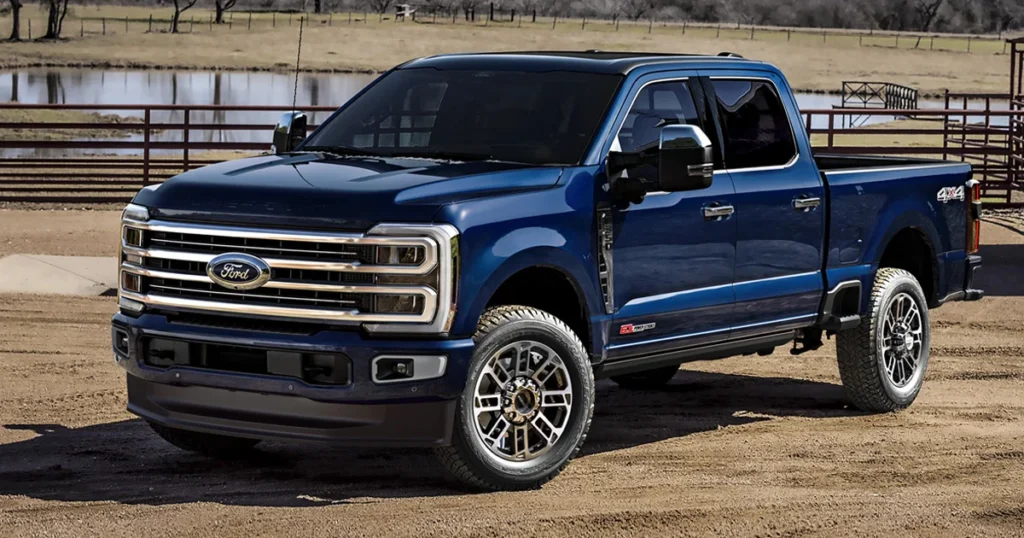
When people ask how much a Ford F-250 weighs, they are usually looking for one simple number. The real answer is a little more useful than that: the weight changes based on cab style, bed length, drivetrain, engine, and trim. Ford’s own specifications show that the 2025 F-250 Super Duty single-rear-wheel lineup starts at 5,697 pounds and can reach 7,645 pounds depending on configuration. Ford also defines curb weight as the vehicle with a full tank of fuel and standard equipment, but without passengers or cargo.
That range matters because the F-250 is not a one-size-fits-all truck. A regular-cab 4×2 gas model will weigh less than a crew-cab 4×4 diesel model. Even wheelbase and box length can change the final number. So, instead of hunting for one fixed figure, it helps to understand the weight system behind the truck.
What “weight” really means on a truck
Truck buyers often mix up curb weight, GVWR, payload, and towing capacity. Each one tells a different story.
Curb weight is the truck itself, ready to drive, with fuel and standard equipment. Gross Vehicle Weight Rating, or GVWR, is the maximum the truck is allowed to weigh once passengers, cargo, and accessories are added. Payload is the amount you can carry in and on the truck. Towing capacity is how much the truck can pull behind it. Ford’s support pages and spec sheets use these terms separately for a reason.
For shoppers, curb weight is the best starting point when asking, “How heavy is this truck?” It tells you how much truck you are working with before you add a bed full of tools, a trailer hitch setup, or weekend gear.
The short answer
If you need the practical answer right away, here it is:
A 2025 Ford F-250 typically weighs between 5,697 and 7,645 pounds in SRW form, depending on engine, cab, drivetrain, and bed choice. Ford’s official published figures show different base curb weights across Regular Cab, Super Cab, and Crew Cab models, with both 4×2 and 4×4 options included.
That spread is big enough to matter. A difference of nearly 2,000 pounds can affect how the truck feels on the road, how it handles a trailer, and how much payload remains available.
Why the Ford F-250 weight changes so much
The Ford F-250 is built for multiple jobs, and those jobs require different setups. Ford offers several combinations, and each one adds or removes mass.
A larger cab usually weighs more than a smaller cab because it has more structure, doors, glass, interior trim, and seating. A four-wheel-drive system adds front driveline components. A diesel engine is usually heavier than a gasoline engine. Long-bed versions often weigh more than shorter-bed versions because of the added frame and body material. Ford’s spec sheet reflects these differences clearly in the spread of curb weights.
The result is simple: the more truck you add, the heavier the truck becomes.
Weight ranges by configuration
Ford’s published 2025 F-250 SRW figures show that different setups land in different ranges. Here is the pattern in plain language:
Regular Cab models sit near the lighter end of the spectrum. Super Cab versions move upward. Crew Cab models often sit near the top because they carry the most body and interior structure. Four-wheel drive adds further weight, and diesel powertrains generally push the truck higher still.
Ford’s specs list examples such as:
- 6.8L F-250 SRW: from 5,697 to 6,699 pounds
- 7.3L F-250 SRW: from 5,801 to 6,783 pounds
- 6.7L F-250 SRW: from 6,583 to 7,645 pounds
- 6.7L High-Output F-250 SRW: from 6,598 to 7,660 pounds
That gives you a realistic answer: a lighter gas truck and a heavier diesel crew cab are not remotely the same machine.
How cab style affects weight
Cab style is one of the biggest reasons the numbers change.
A Regular Cab is the leanest version because it has the smallest body footprint. A Super Cab adds extra space and structure. A Crew Cab adds a full rear seating area, which means more sheet metal, more glass, more interior components, and more weight overall. Ford’s weight tables show that the cab choice alone can move the truck by several hundred pounds.
For buyers, this means a crew cab feels more family-friendly and more comfortable for work crews, but it also weighs more and may slightly reduce useful capacity compared with a lighter configuration.
How drivetrain changes the number
Two-wheel drive and four-wheel drive do not weigh the same.
A 4×4 truck needs additional front axle components, transfer-case hardware, driveshaft parts, and supporting structure. That extra hardware adds pounds, which is why Ford lists different curb weights for 4×2 and 4×4 versions of the same basic truck.
If your work or travel rarely leaves paved roads, a 4×2 setup may save some weight. If you need traction in mud, snow, loose ground, or job-site conditions, the added weight of 4×4 is often worth it.
Gasoline versus diesel weight
Engine choice matters a great deal on a heavy-duty truck.
Ford’s published data shows the 6.7L diesel configurations are heavier than the gasoline options. That is expected, because diesel engines and their related hardware tend to be built more robustly. In the 2025 F-250 lineup, the diesel models sit near the top of the curb-weight range, while the gas versions sit lower.
This does not make diesel “better” or “worse.” It only means the truck is configured for a different kind of job. Diesel often appeals to buyers who need strong towing performance and long-distance hauling, while gas models can be a smart fit for other uses.
Why curb weight matters for real-world use
Weight is not just a spec-sheet detail. It affects daily life.
Heavier trucks can feel more planted on the road, especially when towing or carrying cargo. At the same time, a higher curb weight may reduce available payload once you start adding passengers and gear. Because GVWR is fixed, every extra pound of truck structure leaves less room for everything else you carry.
That is why serious buyers compare curb weight with GVWR and payload, not just horsepower or towing numbers. A truck that is already heavy before loading may have less remaining room for tools, materials, or a slide-in camper.
Weight and towing: how they work together
A common mistake is to think that a heavier truck automatically tows more. The truth is more balanced.
Truck weight helps with stability, but towing depends on the full engineering package: frame strength, axle rating, suspension, braking, powertrain, and hitch setup. Ford publishes separate towing and weight ratings for a reason. A truck can weigh more and still not be the best towing choice if the rest of the setup is not right for the task.
For the Ford F-250, weight is part of the towing story, not the whole story. The best setup is the one that matches your trailer, your load, and your road conditions.
Payload and passengers: the hidden math
Payload is where truck weight becomes especially important.
Once you add people, tools, fuel, and bed cargo, the available capacity starts shrinking fast. Ford’s own vehicle details pages show how payload is calculated by taking the truck’s ratings and subtracting occupant and cargo weight. That is why two trucks that look similar on the outside can carry very different real-world loads.
If you plan to haul people in the cab and also carry heavy gear in the bed, choosing a lighter configuration can leave more usable room under the limit.
How to find the exact weight of your truck
There are a few reliable ways to get the exact number for your specific truck.
First, check the door-jamb label and owner documents. Many vehicles list key ratings there. Second, use Ford’s official model pages or spec sheets for your year and trim. Third, visit a certified scale if you want the actual current weight of your truck with your fuel, tools, and accessories included. Ford’s own description of curb weight is the baseline; a scale gives you the real-world number.
This is the best approach if you have added a canopy, bed liner, tool boxes, winches, or other equipment that changes the factory number.
What a buyer should pay attention to
If you are shopping for an Ford F-250, focus on the use case first and the number second.
A lighter regular cab may suit fleet work, utility tasks, or a no-frills job truck. A crew cab diesel may suit towing, long highway drives, or family use. The right answer depends on what the truck will do most of the time. The published weight range helps you compare models, but the best configuration is the one that fits your daily needs without wasting capacity.
That is also why dealers and owners often compare not only curb weight, but also wheelbase, axle ratio, payload, and towing charts before making a decision.
How weight affects ride and handling
Truck weight changes the way the vehicle feels.
A heavier truck can feel steadier at highway speed and less jumpy over rough pavement. On the other hand, extra weight may make steering feel slower and fuel consumption higher. The exact feel depends on suspension tuning and tire choice as well, but mass is always a major factor. Because Ford’s F-250 lineup spans a wide curb-weight range, one version may feel noticeably different from another even though both wear the same badge.
This is one reason test-driving more than one configuration is a good idea.
Weight, fuel economy, and everyday costs
Heavier trucks generally need more energy to move. That can influence fuel use, especially in city driving, stop-and-go traffic, or when carrying a load. It is not the only factor, but it matters.
A lighter configuration may save a little fuel and feel easier to maneuver in tight spaces. A heavier configuration may be worth the trade-off if it gives you the comfort, traction, and capability you need. With a truck like the Ford F-250, the right balance is usually more important than chasing the lightest possible number.
A simple way to think about the numbers
Here is the easiest way to remember it:
The truck’s curb weight is the starting point. GVWR is the ceiling. Payload is what you can still add after the truck itself is built and fueled. Towing is a separate rating. Once you understand those four pieces, the truck spec sheet becomes much easier to read.
That framework turns a confusing question into a practical buying tool.
Related keywords to keep in mind
When researching Ford F-250 weight, these related terms are especially useful: curb weight, gross vehicle weight rating, payload, towing capacity, super duty, diesel engine, gasoline engine, regular cab, super cab, crew cab, 4×2, 4×4, and heavy-duty truck.
These words help you compare trims and understand why one truck weighs more than another.
More reading from BusinessToMark
A few related pages on BusinessToMark can help round out your truck and vehicle research: How Long Does an Oil Change Take, Safety First: Ensuring a Secure and Comfortable Airport Transfer Experience, and How Can You Personalise Your Motocross Bike With Vinyl Graphics.
Frequently asked questions
Is there one exact weight for every Ford F-250?
No. The weight changes by cab, bed, drivetrain, and engine. Ford’s official 2025 SRW specs show a range from 5,697 to 7,645 pounds.
Does a diesel Ford F-250 weigh more than a gas version?
Yes, in Ford’s published 2025 specs, the diesel versions sit higher in the curb-weight range than the gas models.
What is curb weight?
Ford defines curb weight as the vehicle with a full tank of fuel and standard equipment, but without passengers or cargo.
Should I use curb weight or GVWR when loading my truck?
Use both. Curb weight tells you the truck’s base mass, while GVWR tells you the upper limit for the fully loaded vehicle.
Conclusion
So, how much does a Ford F-250 weigh? The best answer is that it usually falls somewhere between 5,697 and 7,645 pounds in the 2025 SRW lineup, depending on the exact build. That number is shaped by cab size, bed length, drivetrain, and engine choice. Ford’s published specifications make it clear that the F-250 is not a single weight, but a family of truck setups designed for different jobs.