A Sports Memorabilia Autographed Baseball carries more than ink on leather. It can hold a memory from a ballpark night, a connection to a favorite player, or a reminder of a historic season that still gets discussed years later. For many collectors, the real appeal is not only the object itself but the story it represents. A signed baseball can mark an unforgettable game, a personal encounter, or a carefully chosen gift that becomes part of a family’s memory.
Sports memorabilia is a broad category that includes autographs, trading cards, equipment, photographs, and other items tied to athletic history. Baseball remains one of the most collected sports because signatures and team-related artifacts are deeply linked with tradition, nostalgia, and fan culture. Major League Baseball even operates an authentication program that uses tamper-resistant hologram stickers and unique codes to help verify certain memorabilia items.
That matters because the best collections are built on confidence. When a buyer knows how to read a signature, check provenance, and understand authentication, the purchase feels less risky and far more rewarding. Whether the goal is display, collecting, gifting, or preserving family keepsakes, a well-chosen Sports Memorabilia Autographed Baseball can become a standout piece in any collection. The key is learning what separates a meaningful collectible from a rushed purchase.
Why a Signed Baseball Still Means So Much
Baseball has a long memory. It is a sport that celebrates records, milestones, and eras, which makes signed baseballs especially appealing to fans who enjoy tangible reminders of history. The round shape of the ball gives the autograph a clean visual stage, and that makes the signature itself feel like the main event. A neatly signed baseball can look elegant on a desk, a shelf, or inside a display case, and it often feels more personal than larger memorabilia pieces.
Another reason these collectibles stay popular is their versatility. Some collectors chase Hall of Fame signatures, others prefer team-signed balls, and others focus on personal significance, such as a ball signed at a game they attended with family. The item can fit different budgets and collecting styles. That flexibility is one reason signed baseballs continue to draw attention from both casual fans and serious collectors.
A good purchase also depends on expectation. A ball signed by a famous player at a private signing will usually be valued differently from one signed in person at the stadium. Neither is automatically better; they just serve different collecting goals. Once you understand that distinction, the search becomes more focused and far less confusing.
What to Look for Before You Buy
The first step is to slow down. A signed baseball looks simple, but the details matter. Start with the autograph itself. Is it clean, legible, and placed on a smooth panel? Does the ink look consistent with the age of the item? Does the signature appear rushed or unusually shaky? These clues do not prove authenticity on their own, but they help you judge whether the listing deserves a closer look.
Next, examine the ball. Official balls, special-edition balls, and older game-style balls may all be used for signatures, but the type of ball changes the look and sometimes the value. A clean white baseball often presents the autograph best, while an aged or yellowed ball may be more attractive to collectors who like vintage character. Either way, the condition of both the ball and the ink should match the seller’s description.
A strong listing should also include clear photos from multiple angles. You want close-ups of the autograph, the brand marks, any inscription, and any authentication sticker or certificate. If a seller provides only one distant image, treat that as a warning sign. The best listings make it easy to inspect the item before money changes hands.
How to Judge Authenticity with More Confidence
Authenticity is the heart of collecting. A Sports Memorabilia Autographed Baseball may look impressive, but it is only as trustworthy as the evidence behind it. One of the strongest signs of reliability is third-party authentication from recognized services. Major League Baseball’s own authentication program is one example of a system built to help verify memorabilia, and the broader market also relies on established authenticators and documented chain of custody.
Look closely at the certificate or sticker number if one is included. A reputable seller should be able to explain who authenticated the item, when it was authenticated, and how the verification can be checked. The best listings do not treat authentication as decoration; they treat it as evidence. If a seller only says “looks real” or “from a trusted source” without any documents, that is not enough for a serious purchase.
Provenance is also important. Provenance means the item’s origin story, and in memorabilia collecting it can be extremely useful. A baseball signed at a public signing event, accompanied by event photos or a receipt, is easier to evaluate than one with no background at all. If the story changes from one message to another, be cautious. Reliable sellers tend to be consistent, precise, and willing to answer questions directly.
The Role of Condition in Value and Presentation
Condition affects both enjoyment and market appeal. Some collectors want a pristine ball with bold ink and almost no surface wear. Others like balls that show age, patina, or a naturally vintage look. Either way, the condition should be honest and obvious. The most common issues include faded ink, smudging, water spots, scuffs, discoloration, and surface grime.
Ink quality matters especially because the autograph is the main visual feature. Bold, dark signatures tend to photograph better and remain easier to appreciate in a display setting. A faint or uneven signature may still be meaningful, but it can be harder to enjoy and harder to resell. If a seller uses lighting tricks to make faded ink look darker, the photos may be misleading.
The ball’s surface also matters. An official baseball with crisp stitching and clean panels usually presents better than a heavily worn one, especially for a modern collectible. Vintage collectors may accept more wear, but the item should still be described accurately. The best rule is simple: buy the condition you actually want, not the condition you hope it might be after purchase.
Where Collectors Commonly Go Wrong
Many mistakes happen when excitement outruns caution. One of the most common errors is paying too much for a signature without enough proof. Another is assuming that every autograph is valuable simply because it is on a baseball. That is not true. The player, the quality of the signature, the authenticity trail, and the overall presentation all matter.
A second mistake is ignoring return policies. In collectible purchases, a clear return policy can be reassuring, especially when the item is expensive or the authentication details are incomplete. A seller who refuses basic questions, avoids close photos, or pressures you to act quickly should not be treated as a safe choice.
A third mistake is forgetting display and storage needs before buying. Some collectors purchase a ball they love, only to realize later that they have no proper case, no UV protection, and no clean shelf space. That turns a joyful purchase into an avoidable problem. A thoughtful collector plans for the item’s future the moment it enters the collection.
Storing and Displaying a Signed Baseball the Right Way
Once you own a Sports Memorabilia Autographed Baseball, protection becomes just as important as the purchase itself. The biggest threats are sunlight, heat, humidity, dust, and frequent handling. A signed ball that sits near a bright window may slowly fade. One stored in a damp room may develop surface issues. One passed around too often may pick up oils and wear.
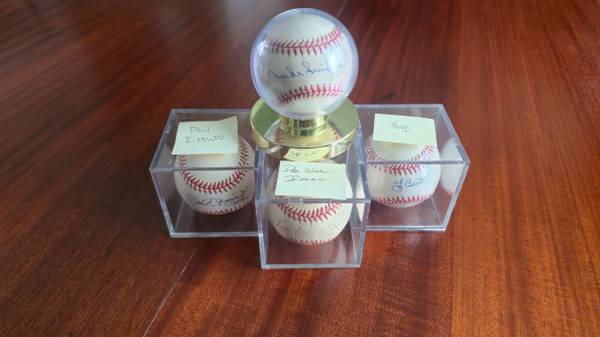
A display case is usually the best choice. It keeps dust away, reduces handling, and lets the piece remain visible. Acrylic cases, cube displays, and multi-ball shelving systems each serve different purposes. The right choice depends on whether you want a single centerpiece or part of a larger arrangement. For especially meaningful pieces, UV-resistant display solutions are worth considering because they help slow fading over time.