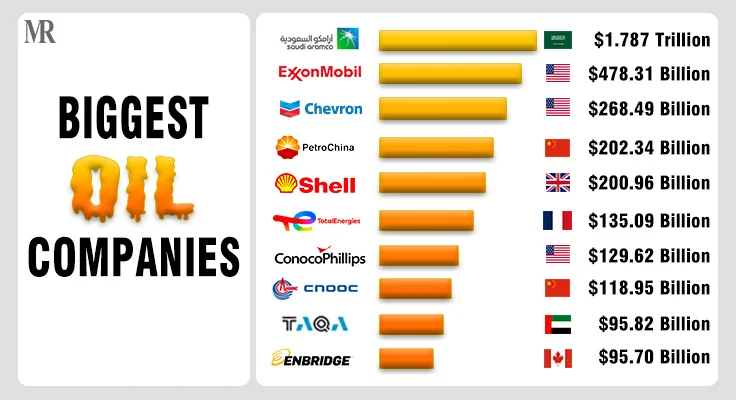
Deepwater energy still matters because it combines scale, technical skill, and long-cycle planning in a way few other upstream plays can match. In simple terms, deepwater drilling means working far offshore in water deep enough that floating rigs, subsea systems, and specialized production facilities become essential. That is why the companies that succeed in this space are usually the ones with the strongest engineering teams, the best project discipline, and the patience to invest for years rather than quarters.
For 2025, the most relevant names are not just the biggest producers. They are the companies that continue to start up new offshore projects, expand deepwater acreage, and turn difficult geology into long-lived production. That is what this guide looks at: the top oil companies for deepwater projects in 2025, based on recent project activity, offshore momentum, and portfolio strength.
Why deepwater remains one of the toughest parts of the oil business
Deepwater is not attractive because it is easy. It is attractive because it can unlock very large reservoirs and support long production lives when the right technology is in place. Fields in Brazil, Guyana, Angola, the U.S. Gulf, and Nigeria show why the category keeps drawing capital: these basins can deliver major volumes, but only if the operator can handle water depth, high pressure, subsea tiebacks, floating production units, and strict execution discipline.
The most successful top oil companies in this space share a few traits. They spread risk across multiple basins, maintain strong technology partnerships, and keep a pipeline of discoveries and developments moving at once. In 2025, that combination matters because deepwater projects are often the backbone of future growth, not just a side business.
How this list was chosen
This is not a stock-market ranking. It is a practical list based on recent deepwater starts, active development pipelines, large offshore holdings, and evidence of continued investment in subsea and floating production systems. I leaned on company releases and project pages from 2025 because those give the clearest picture of who is actually moving deepwater projects forward right now.
The top oil companies for deepwater projects in 2025
ExxonMobil
ExxonMobil stands near the front of the pack because its deepwater portfolio is both large and active. In 2025, the company started first deepwater production in Brazil at Bacalhau, a major milestone that added another large offshore asset to its global lineup. Earlier in the same year, ExxonMobil also brought Yellowtail on stream in Guyana, pushing installed capacity in the country above 900,000 barrels of oil per day.
What makes ExxonMobil so strong is not only the number of projects, but the way it executes them. The company describes itself as one of the most active deepwater explorers in the industry and holds deepwater acreage in many key regions, including Angola. That matters because deepwater success depends on repeatability: exploration, appraisal, development, and startup must all work together. ExxonMobil has shown that it can move from discovery to production at scale.
Brazil and Guyana are especially important to ExxonMobil’s 2025 story. Bacalhau marked its first upstream production in Brazil after decades in the market, while Yellowtail expanded the Guyana growth story with schedule performance that was ahead of plan. For anyone watching the sector, ExxonMobil is one of the clearest examples of a company that treats deepwater not as a niche, but as a core growth engine.
Petrobras
Petrobras is one of the strongest deepwater operators in the world, especially in ultra-deep Brazilian pre-salt. The company’s own pages describe Búzios as the largest field in ultra-deep waters in the global industry, and in 2025 the field reached the milestone of 1 billion barrels of oil equivalent. That is the kind of scale that defines the deepwater category.
Petrobras also kept investing heavily through its 2025–2029 business plan, which set out large capital commitments and showed that offshore development remains central to the company’s strategy. The firm’s participation in OTC 2025, described as the world’s largest deepwater oil and gas conference, also signals how closely it stays tied to the deepwater ecosystem of suppliers, engineers, and project partners.
In practical terms, Petrobras stands out because it combines reserve quality, operating experience, and infrastructure depth. Its pre-salt position is a long-term advantage, and the company’s continued use of high-productivity wells, large FPSOs, and improved reservoir knowledge makes it one of the most important top oil companies for deepwater watchers in 2025.
Chevron
Chevron has one of the most disciplined deepwater portfolios in the industry, especially in the U.S. Gulf. In 2025, the company started oil production from the Whale semi-submersible platform and the Ballymore subsea tieback, both in the deepwater Gulf. Those are not just isolated events; they are part of a broader offshore growth pattern that keeps Chevron firmly in the conversation.
Chevron’s deepwater strength is built on a portfolio approach. The company says its upstream business is anchored by deepwater among other core assets, and its U.S. pages highlight projects like Ballymore as part of overall Gulf production. Anchor, which started in 2024, also matters because it brought industry-first deepwater technology into a commercial project and expanded the company’s deepwater credibility.
What makes Chevron especially relevant in 2025 is the combination of production and technology. It is not chasing only one basin or one headline discovery. It is steadily building a set of offshore assets that reinforce each other, which is exactly what a deepwater leader needs to do over time.
Shell
Shell remains a major deepwater player because it has depth in both the U.S. Gulf and West Africa. In 2025, Shell started production at Whale in the U.S. Gulf of Mexico, adding another large offshore project to its portfolio. The company also completed the acquisition of increased interest in Nigeria’s deep-water Bonga field, lifting its stake in the OML 118 PSC from 55% to 67.5%.
Shell’s own deep-water materials describe offshore oil and gas as an increasingly important part of its production mix. That matters because deepwater is where Shell can apply its strengths in floating systems, subsea development, and operating complex offshore assets in harsh environments. The company is not simply present in deepwater; it has built a meaningful portion of its upstream identity around it.
Nigeria is especially important because Bonga has been one of Shell’s most recognized offshore assets for years. By increasing its interest in the field in 2025, Shell signaled that it still sees long-term value in deepwater assets that can generate stable output when managed carefully. That is why Shell remains one of the top oil companies for deepwater projects in 2025.
bp
bp deserves a place on any 2025 deepwater list because it keeps turning offshore opportunities into production and discovery milestones. In 2025, bp announced production from its seventh major project of the year and described itself as a leading producer in the deepwater Gulf of America, where it operates five production platforms. That is a meaningful sign of sustained offshore strength.
bp also announced a hydrocarbon discovery at Bumerangue offshore Brazil in August 2025, showing that the company is still active in frontier-style deepwater exploration. This is important because deepwater leaders need both production and exploration. A company that can do one but not the other eventually loses momentum. bp is still doing both.
What makes bp especially interesting is its project pipeline. The company has been publicly discussing a series of major upstream projects, and that pipeline supports long-term offshore relevance. In a sector where many companies focus on short-term output, bp’s deepwater activity suggests it still sees offshore growth as a major strategic pillar.
TotalEnergies
TotalEnergies is one of the most experienced deep and ultra-deep offshore operators, particularly in Angola. The company’s Angola page says it operates several deep and ultra-deep offshore oil licenses in production, including Block 17, Block 32, and Block 0. It also states that the Begonia Oil Project in Block 17/06 is expected to start producing in 2025 using existing facilities.
That combination of production base and new development makes TotalEnergies highly relevant. In deepwater, using existing infrastructure efficiently can improve economics and shorten the path from development to output. The company’s strategy and outlook materials also show that it continues to assess frontier opportunities such as Namibia, even if some projects remain subject to timing and commercial decisions.
TotalEnergies is valuable in a deepwater discussion because it has patience, regional knowledge, and the ability to work with complex offshore geology. It may not always have the loudest headlines, but it consistently shows up where deepwater development requires scale, infrastructure, and technical confidence.
Eni
Eni has become a very serious deepwater name, especially in Africa. In 2025, the company announced the start-up of Agogo Integrated West Hub offshore Angola, operated by Azule Energy. That project matters because it shows continued execution in an important deepwater basin with strong long-term potential.
Later in 2025, Eni also announced a final investment decision for the Coral North FLNG project, a deepwater offshore development in Mozambique. This is a major signal that Eni still sees large-scale offshore gas as part of its future. The company’s Indonesia activities page adds another layer, since it describes final investment decisions for deep-water gas hubs in that market as well.
Eni stands out because it is not limited to one geography. Angola, Mozambique, and Indonesia each present different technical and commercial challenges, but Eni has shown that it can move through them with a flexible development model. That is the profile of a company that belongs on any list of the top oil companies for deepwater projects in 2025.
Equinor
Equinor is best known for disciplined offshore development, and its 2025 deepwater story is anchored by Brazil. The company reported that Bacalhau, its largest international field and largest offshore field outside Norway, came on stream in October 2025. It also described Raia as another major ultra-deepwater development expected to come on stream in 2028.
This matters because Equinor’s Brazil portfolio shows a long runway rather than a one-off project. Bacalhau adds near-term production, while Raia suggests the company is still building its offshore future. Equinor’s project page for Bay du Nord in Canada also shows that it sees deepwater as a multi-basin opportunity, not a single-country strategy.
Equinor is also notable for its operational style. It tends to focus on technically demanding fields where project design, emissions management, and development efficiency all matter at once. That gives it a different profile from some of the larger supermajors, but it is still squarely among the key top oil companies in deepwater.
What separates the leaders from the rest
The strongest deepwater companies in 2025 are not all the same. Some are best at giant basin-scale developments, like Petrobras in Brazil or ExxonMobil in Guyana. Others are more balanced across multiple offshore regions, like Shell, bp, and TotalEnergies. Some excel at combining production with exploration, like Eni and Equinor. The common thread is that they all keep moving difficult offshore projects toward startup and stable production.
Another separator is project execution speed. In deepwater, a company that can start ahead of schedule or turn discoveries into producing assets without major delay gains a major advantage. ExxonMobil’s Yellowtail startup, Chevron’s 2025 Gulf starts, and Shell’s Whale startup all show how valuable strong execution is in this part of the market.
How to read deepwater strength in 2025
A company’s deepwater strength is usually visible in three places. First, look at the basins it controls. Brazil, Guyana, Angola, Mozambique, Nigeria, and the U.S. Gulf remain major deepwater theaters. Second, look at whether the company is starting production or only talking about future projects. Third, look at the complexity of its assets, because floating production, subsea tiebacks, and ultra-deep developments require very different capabilities than shallow-water work.
That framework helps explain why the top oil companies for deepwater are not chosen only by size. They are chosen by portfolio quality, project pipeline, and ability to keep capital moving into the right offshore assets. In other words, deepwater leadership is earned through execution.
A practical shortlist
If you want the shortest possible answer, the names that stand out most in 2025 are ExxonMobil, Petrobras, Chevron, Shell, bp, TotalEnergies, Eni, and Equinor. Each of them has either started major offshore production in 2025, advanced a deepwater project, or shown a large and continuing commitment to ultra-deep basins.
Related reading on BusinessToMark
For a broader oil-related angle, see How Long Does an Oil Change Take on BusinessToMark, which keeps the “oil” keyword in a practical everyday setting. For a people-and-organization angle, What Does a Career in HR Involve? is useful for understanding the human side of large companies. For a broader business-growth perspective, MrBeast Net Worth shows how scale, ownership, and long-term planning can create huge enterprise value.
Final thoughts
Deepwater remains one of the most demanding parts of the upstream industry, which is exactly why success there says so much about a company. The leaders in 2025 are not simply extracting hydrocarbons; they are managing remote assets, subsea complexity, long timelines, and high-value reservoirs all at once. That is why ExxonMobil, Petrobras, Chevron, Shell, bp, TotalEnergies, Eni, and Equinor stand out so clearly in this field.