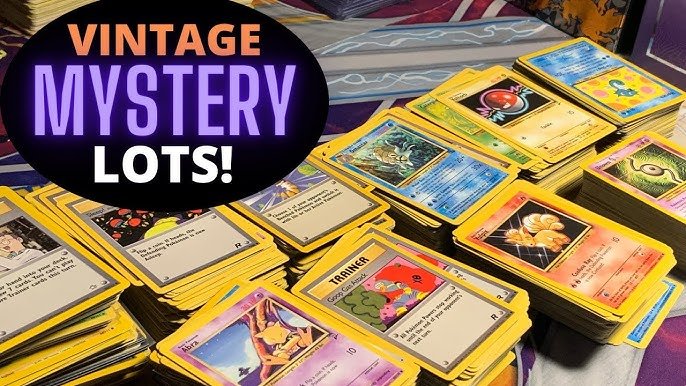
A Vintage Pokemon Cards Lot 1st Edition can be exciting because it combines nostalgia, rarity, and the simple joy of sorting through older cards. For many collectors, the appeal is not only in finding a famous card, but also in the story inside the lot: where the cards came from, how they were kept, and whether the set details still match what the seller claims. In the Pokémon TCG, 1st Edition cards are the first print run of a set, and for English cards they are identified by the circular “Edition 1” stamp near the lower left of the art box. Collectors also pay close attention to shadowless Base Set cards, which are linked to early 1999 printing and are distinct from Unlimited versions.
Buying a lot instead of a single card changes the experience. A lot may include commons, uncommons, rares, holos, duplicates, and sometimes cards from different early sets. That can be a smart way to build a collection, but it also means you need a clear eye. A lot with several authentic early cards can be a strong purchase, while a bundle of mixed-condition cards with vague descriptions can be disappointing. This guide walks through the main details that matter so you can judge a lot with confidence and avoid unnecessary mistakes.
What a Vintage Pokemon Cards Lot 1st Edition Really Means
A lot is simply a grouped sale of cards, usually sold together as one package. In vintage Pokémon collecting, that can mean a binder lot, an unsorted lot, a curated set lot, or a mixed collection gathered over many years. When the phrase Vintage Pokemon Cards Lot 1st Edition appears in a listing, it usually signals that the seller believes at least some cards in the group are early printings from the original Wizards of the Coast era. The key point is that “1st Edition” is a print status, not a guarantee of value by itself. The card still needs to be authentic, correctly identified, and in acceptable condition.
Why the First Edition stamp matters
The First Edition stamp marks the first print run of a set. For English Pokémon cards, the stamp is a small circular symbol with a “1” and the word “Edition” around it, placed near the lower left of the card art box. Because these were first-run cards, they are often considered more desirable than Unlimited prints. That is one reason collectors search for vintage bundles that include 1st Edition cards rather than ordinary mixed lots.
Why early Base Set cards attract attention
The Base Set is the starting point for many collectors. It was the first main English Pokémon TCG expansion, released on January 9, 1999, and the Japanese core release came earlier in 1996. The earliest English print variants from this era are closely watched by collectors because they represent the foundation of the hobby in the West. That historical importance is a major reason a carefully chosen lot can feel special even when it is made up of ordinary commons and uncommons.
How to Read the Cards in a Lot
A good buyer does not just ask, “Is it old?” The better question is, “What exactly is here?” That means checking the edition stamp, the set identity, the card border, the copyright line, and the condition. A strong lot description should help you answer all of those questions before money changes hands.
Locate the 1st Edition stamp
The first thing to check is the stamp itself. On English cards, the 1st Edition mark appears near the lower left corner of the artwork box. It should be clear, properly placed, and consistent with the set. If the seller’s photos are blurry or cropped, ask for closer shots before you decide anything. PSA’s collector guide notes that 1st Edition cards are first-run cards and that the symbol is a major identifier for English releases.
Look for shadowless traits on Base Set cards
If you are dealing with Base Set cards, shadowless printing is one of the biggest details to know. Shadowless cards are associated with the 1999 Base Set and are known for lacking the drop shadow around the card artwork frame. PSA notes that shadowless cards are unique to the 1999 Base Set, and other collector references explain that these cards are part of the early production history of the set. When a lot includes Base Set cards, shadowless examples can be especially important because they help identify earlier print runs.
Check set history and copyright lines
The copyright year and set features can help you spot whether a card belongs to the expected print era. Early English Base Set cards are often discussed in terms of 1st Edition, Shadowless, and Unlimited variations. If the listing claims “vintage” but the cards show a much later era, the lot may not be what you expected. A careful buyer compares the card face, the stamp, and the set clues instead of relying on the seller’s headline alone.
What Makes a Lot Strong for Collectors
A lot becomes much more attractive when it has both quality and clarity. Quality means authentic cards with useful vintage value. Clarity means a seller has shown enough information for you to judge what is there.
A mix of useful cards
Some buyers want a lot with one big headline card. Others prefer a lot that contains many smaller pieces of the same era. A strong vintage bundle may include 1st Edition commons and uncommons, a few rare non-holo cards, and perhaps one or more holos. This kind of mix can be appealing because it gives the buyer more variety and more chances to complete a set. In the original English Base Set release, booster packs were 11-card packs with seven commons, three uncommons, and one rare, and roughly one in three packs contained a holographic rare. That pack structure helps explain why vintage lots often contain many lower-rarity cards alongside the rarer ones.
Condition matters more than people expect
Condition can change everything. A clean 1st Edition common can be very enjoyable for a collector, while a damaged rare may feel less satisfying than expected. Corners, whitening, scratches, bends, and surface wear all matter. Even when a lot is authentic, poor condition can reduce its appeal because many collectors want cards that still look sharp in a binder or sleeve. In practice, condition is part of the value, not an afterthought.
Duplicates are not always a problem
A lot with duplicates can still be useful. Extra copies help with trades, binder displays, and set building. Duplicates also let you compare print differences and train your eye on card condition. For someone who likes sorting and organizing, duplicates can be part of the fun rather than a drawback.
Buying With Confidence
The safest purchases come from listings that make verification easy. The best seller photos are clear, straight, and close enough to show details without distortion.
Ask for sharp photos of the front and back
A seller should ideally show both sides of the cards, especially if the lot includes claimed 1st Edition cards. You want to see the stamp, the borders, the corners, and any visible wear. If the images are too small to inspect, you are taking on more risk than necessary. Good photos do not guarantee perfection, but they reduce surprises.
Confirm what is included in the lot
Some sellers use broad language like “vintage lot,” “old collection,” or “early cards” without listing specific contents. Before paying, try to confirm whether the lot includes holos, Trainer cards, energy cards, duplicates, binder pages, or only loose cards. A clear inventory helps you compare the asking price to the actual contents. When you are looking at a Vintage Pokemon Cards Lot 1st Edition, clarity is often worth more than hype.
Think about how the cards were stored
Storage history matters. Cards that were kept in sleeves, binders, or boxes usually age better than cards handled loosely in drawers or bags. Even if a lot is not professionally graded, a clean storage history can protect edges and surfaces. Ask about smoke exposure, moisture, sunlight, and handling if the lot is significant enough to justify the questions.
Use grading terms carefully
Some listings mention grading, pre-grading, or high-grade potential. Be cautious with that language unless the photos support it. A card can look good in one image and still have edge wear, surface scratches, or a bend that changes its grade outcome. Grading is a useful tool, but it should not replace your own inspection.