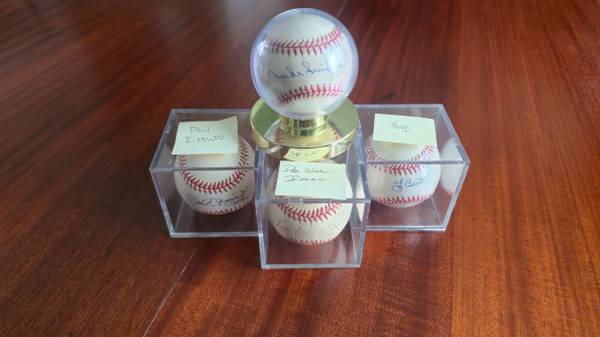
A Sports Memorabilia Autographed Baseball carries more than ink on leather. It can hold a memory from a ballpark night, a connection to a favorite player, or a reminder of a historic season that still gets discussed years later. For many collectors, the real appeal is not only the object itself but the story it represents. A signed baseball can mark an unforgettable game, a personal encounter, or a carefully chosen gift that becomes part of a family’s memory.
Sports memorabilia is a broad category that includes autographs, trading cards, equipment, photographs, and other items tied to athletic history. Baseball remains one of the most collected sports because signatures and team-related artifacts are deeply linked with tradition, nostalgia, and fan culture. Major League Baseball even operates an authentication program that uses tamper-resistant hologram stickers and unique codes to help verify certain memorabilia items.
That matters because the best collections are built on confidence. When a buyer knows how to read a signature, check provenance, and understand authentication, the purchase feels less risky and far more rewarding. Whether the goal is display, collecting, gifting, or preserving family keepsakes, a well-chosen Sports Memorabilia Autographed Baseball can become a standout piece in any collection. The key is learning what separates a meaningful collectible from a rushed purchase.
Why a Signed Baseball Still Means So Much
Baseball has a long memory. It is a sport that celebrates records, milestones, and eras, which makes signed baseballs especially appealing to fans who enjoy tangible reminders of history. The round shape of the ball gives the autograph a clean visual stage, and that makes the signature itself feel like the main event. A neatly signed baseball can look elegant on a desk, a shelf, or inside a display case, and it often feels more personal than larger memorabilia pieces.
Another reason these collectibles stay popular is their versatility. Some collectors chase Hall of Fame signatures, others prefer team-signed balls, and others focus on personal significance, such as a ball signed at a game they attended with family. The item can fit different budgets and collecting styles. That flexibility is one reason signed baseballs continue to draw attention from both casual fans and serious collectors.
A good purchase also depends on expectation. A ball signed by a famous player at a private signing will usually be valued differently from one signed in person at the stadium. Neither is automatically better; they just serve different collecting goals. Once you understand that distinction, the search becomes more focused and far less confusing.
What to Look for Before You Buy
The first step is to slow down. A signed baseball looks simple, but the details matter. Start with the autograph itself. Is it clean, legible, and placed on a smooth panel? Does the ink look consistent with the age of the item? Does the signature appear rushed or unusually shaky? These clues do not prove authenticity on their own, but they help you judge whether the listing deserves a closer look.
Next, examine the ball. Official balls, special-edition balls, and older game-style balls may all be used for signatures, but the type of ball changes the look and sometimes the value. A clean white baseball often presents the autograph best, while an aged or yellowed ball may be more attractive to collectors who like vintage character. Either way, the condition of both the ball and the ink should match the seller’s description.
A strong listing should also include clear photos from multiple angles. You want close-ups of the autograph, the brand marks, any inscription, and any authentication sticker or certificate. If a seller provides only one distant image, treat that as a warning sign. The best listings make it easy to inspect the item before money changes hands.
How to Judge Authenticity with More Confidence
Authenticity is the heart of collecting. A Sports Memorabilia Autographed Baseball may look impressive, but it is only as trustworthy as the evidence behind it. One of the strongest signs of reliability is third-party authentication from recognized services. Major League Baseball’s own authentication program is one example of a system built to help verify memorabilia, and the broader market also relies on established authenticators and documented chain of custody.
Look closely at the certificate or sticker number if one is included. A reputable seller should be able to explain who authenticated the item, when it was authenticated, and how the verification can be checked. The best listings do not treat authentication as decoration; they treat it as evidence. If a seller only says “looks real” or “from a trusted source” without any documents, that is not enough for a serious purchase.
Provenance is also important. Provenance means the item’s origin story, and in memorabilia collecting it can be extremely useful. A baseball signed at a public signing event, accompanied by event photos or a receipt, is easier to evaluate than one with no background at all. If the story changes from one message to another, be cautious. Reliable sellers tend to be consistent, precise, and willing to answer questions directly.
The Role of Condition in Value and Presentation
Condition affects both enjoyment and market appeal. Some collectors want a pristine ball with bold ink and almost no surface wear. Others like balls that show age, patina, or a naturally vintage look. Either way, the condition should be honest and obvious. The most common issues include faded ink, smudging, water spots, scuffs, discoloration, and surface grime.
Ink quality matters especially because the autograph is the main visual feature. Bold, dark signatures tend to photograph better and remain easier to appreciate in a display setting. A faint or uneven signature may still be meaningful, but it can be harder to enjoy and harder to resell. If a seller uses lighting tricks to make faded ink look darker, the photos may be misleading.
The ball’s surface also matters. An official baseball with crisp stitching and clean panels usually presents better than a heavily worn one, especially for a modern collectible. Vintage collectors may accept more wear, but the item should still be described accurately. The best rule is simple: buy the condition you actually want, not the condition you hope it might be after purchase.
Where Collectors Commonly Go Wrong
Many mistakes happen when excitement outruns caution. One of the most common errors is paying too much for a signature without enough proof. Another is assuming that every autograph is valuable simply because it is on a baseball. That is not true. The player, the quality of the signature, the authenticity trail, and the overall presentation all matter.
A second mistake is ignoring return policies. In collectible purchases, a clear return policy can be reassuring, especially when the item is expensive or the authentication details are incomplete. A seller who refuses basic questions, avoids close photos, or pressures you to act quickly should not be treated as a safe choice.
A third mistake is forgetting display and storage needs before buying. Some collectors purchase a ball they love, only to realize later that they have no proper case, no UV protection, and no clean shelf space. That turns a joyful purchase into an avoidable problem. A thoughtful collector plans for the item’s future the moment it enters the collection.
Storing and Displaying a Signed Baseball the Right Way
Once you own a Sports Memorabilia Autographed Baseball, protection becomes just as important as the purchase itself. The biggest threats are sunlight, heat, humidity, dust, and frequent handling. A signed ball that sits near a bright window may slowly fade. One stored in a damp room may develop surface issues. One passed around too often may pick up oils and wear.
A display case is usually the best choice. It keeps dust away, reduces handling, and lets the piece remain visible. Acrylic cases, cube displays, and multi-ball shelving systems each serve different purposes. The right choice depends on whether you want a single centerpiece or part of a larger arrangement. For especially meaningful pieces, UV-resistant display solutions are worth considering because they help slow fading over time.
Handling should always be minimal. Wash and dry your hands before touching the ball, and hold it gently by the seams rather than rubbing the autograph itself. If you are moving it for cleaning or repositioning, take your time. Even a small slip can cause a mark that cannot be undone. Think of the ball as both a collectible and a record of a moment you want to preserve.
Building a Collection with a Clear Purpose
Not every collector should chase the same kind of item. Some people collect only Hall of Fame signatures. Others focus on one team, one era, or one player they personally admire. Some buy for family gifts or office displays. A clear purpose makes every decision easier.
If you are collecting for nostalgia, the emotional link may matter more than market rarity. A baseball signed by a hero from childhood can mean far more than an expensive but impersonal item. If you are collecting for display, visual quality may matter most. If you are collecting with an eye on future value, then authentication, condition, and player demand may become the priority.
It also helps to set a budget for each purchase. Collecting works best when it feels steady rather than impulsive. A thoughtful approach allows you to compare listings patiently, learn market patterns, and avoid regret. Over time, that patience usually leads to a stronger and more meaningful collection.
For a broader look at the site’s sports coverage, this internal article is a useful companion read: Cristiano Ronaldo vs Lionel Messi All-Time Career Goals Comparison 2026
Comparing Online Listings and In-Person Purchases
Online shopping offers choice, but it also requires discipline. The advantage is obvious: you can compare sellers, prices, and authentication details without leaving home. The downside is that you must trust photos, descriptions, and the seller’s communication. That is why image clarity is so important. A listing with multiple clean photos, a full description, and verifiable authentication is usually more trustworthy than one with vague language and a low-quality image.
In-person purchases feel different because you can inspect the item directly. You can see the sheen of the ink, the placement of the autograph, and the overall condition with your own eyes. That tactile confidence is valuable. Still, in-person deals should not bypass verification. A friendly conversation is not a substitute for proof.
Some collectors enjoy auctions because they can uncover unusual pieces, while others prefer fixed-price listings because they provide certainty. There is no single correct route. The right path is the one that matches your budget, patience, and comfort with research. The more familiar you become with typical signatures and pricing patterns, the easier it becomes to spot a strong listing.
Why the Market Keeps Drawing Interest
The market for sports collectibles has remained strong because people do not buy them only as objects. They buy stories, memories, and symbols of achievement. Forbes has noted that authentication has become increasingly sophisticated as sports memorabilia values rise, and it has also reported on the growing importance of protecting collectible purchases and understanding what makes them credible.
That wider trend helps explain why a Sports Memorabilia Autographed Baseball continues to attract both fans and serious collectors. The item is compact, recognizable, and easy to display. It also ties directly to the emotional world of baseball, where every signature can feel like a moment frozen in time. For many buyers, that emotional value is the real reason the item matters.
The market also benefits from the fact that baseball has strong collecting traditions. Cards, balls, bats, photos, and jerseys all belong to the same culture of memory and preservation. A signed baseball is one of the simplest entry points into that world, which makes it friendly to newcomers while still interesting to experienced collectors.
Practical Checklist Before You Pay
Before finalizing any purchase, pause and review the details one more time. Ask whether the autograph is clear, whether the photos are complete, whether the seller has a return policy, and whether the authentication can be verified. Think about the display plan too. Where will the ball sit? Will it be protected from sunlight? Is the case already ready?
It is also wise to ask whether the item fits your purpose. A gift buyer may care most about presentation and meaning. A hobby collector may care about player names, team history, and signature style. A resale-minded buyer may care more about demand, documentation, and condition. None of these goals is wrong, but each one changes what counts as a good purchase.
When the answers line up, the buying decision becomes much easier. The best collectible is not always the loudest listing or the most dramatic price tag. It is the piece that fits your goal, comes with clear proof, and feels right the moment you imagine it in your collection.
How to Keep the Item Looking Its Best for Years
Preservation is not complicated, but it does require consistency. Keep the ball in a stable indoor environment away from direct sunlight. Avoid storage areas that become hot, cold, or humid. Use a case that keeps dust away while still allowing you to enjoy the display. If the item is especially important, place it where it will not be bumped or handled often.
Cleaning should be gentle and rare. Do not use harsh sprays or abrasive cloths on the autograph. If the display case gets dusty, clean the case rather than the ball itself whenever possible. The less direct contact the signature receives, the better.
It also helps to document your collection. Keep purchase receipts, authentication certificates, and clear photos together in one place. That record protects your memory of the item and can be helpful later if you ever reorganize, insure, or pass on the collection. Good collecting is not only about buying well; it is about caring well.
If you want a practical business-and-growth perspective on content, listings, and online promotion, this piece is also helpful: Best Software Stacks and Digital Marketing Strategies for Startup Growth and…
A Final Thought on Meaning and Value
A Sports Memorabilia Autographed Baseball can be a celebration of a player, a season, a family moment, or a lifelong love of the game. That is what makes it more than a simple collectible. It becomes a small, lasting piece of baseball history that can live on a shelf, in a display cabinet, or in a memory box for generations.
The best collectors are usually the most patient ones. They read carefully, compare honestly, ask questions, and protect what they buy. They understand that value is not only measured by price. It is also measured by authenticity, presentation, story, and personal connection. When those pieces come together, the signed baseball becomes something much more powerful than a souvenir. It becomes a keepsake worth preserving. For a broader external overview of the memorabilia space, this reference is useful: Sports memorabilia on Wikipedia