The smartphone industry is standing at a familiar crossroads. Every few years, a new form factor emerges, promising to redefine how we hold, view, and interact with our digital lives. From the tactile keyboard of the BlackBerry to the immersive canvas of the original iPhone, these shifts rarely happen overnight. Today, the conversation revolves around bendable screens, hinge mechanisms, and pocket-sized tablets that fold into phones. While competitors like Samsung, Google, and OnePlus have already launched multiple generations of foldable devices, one giant has remained conspicuously quiet: Apple.
This article is not about hype or speculation. Instead, we will walk through practical considerations: durability, software maturity, pricing, real-world use cases, and the opportunity cost of waiting two years. By the end, you will have a clear framework to make a decision that fits your needs and budget.
Understanding the Foldable Landscape Before 2026
Before deciding whether to hold out for Apple’s foldable iPhone, it is essential to understand where foldable technology stands today. The first modern foldable smartphones arrived in 2019. Since then, the category has improved significantly, but it has also revealed persistent challenges.
The Current State of Foldable Smartphones
As of early 2026, foldable devices fall into two main categories:
-
Book-style foldables (like the Samsung Galaxy Z Fold series) – These open up to reveal a tablet-sized inner screen, typically 7.6 inches or larger.
-
Clamshell foldables (like the Samsung Galaxy Z Flip or Motorola Razr) – These flip shut vertically, resembling a classic flip phone, and offer a compact form factor with a tall, narrow outer display.
Early adopters have praised the novelty and productivity benefits of having a larger screen that still fits in a pocket. However, surveys and repair data reveal three recurring complaints:
-
Crease visibility: A visible line or valley along the fold line, especially visible in bright environments.
-
Hinge durability: Dust and small particles can enter the hinge mechanism, causing premature failure.
-
Screen protector issues: Many foldables ship with pre-installed plastic screen protectors that can peel or bubble over time.
Apple has a well-known reputation for entering a product category only when the technology matures to meet its quality standards. The iPad was not the first tablet. The Apple Watch was not the first smartwatch. And the iPhone was not the first smartphone. This pattern suggests that Apple’s foldable iPhone may arrive later than competitors but with a focus on solving these specific pain points.
What Makes 2026 a Tipping Point?
Why 2026 specifically? Several independent supply chain analysts, including Ming-Chi Kuo and Ross Young, have pointed to 2026 as the target mass-production year for Apple’s foldable display panels. Additionally, Apple has filed numerous patents related to hinge designs, self-healing display materials, and anti-crease technologies.
By 2026, several key improvements are expected industry-wide:
-
UTG 2.0 (Ultra-Thin Glass 2.0): Stronger, more scratch-resistant glass that still bends.
-
Water-dust resistance: Foldables may finally achieve IP68 ratings comparable to traditional phones.
-
Lower hinge complexity: Fewer moving parts means lower repair costs and longer life.
Thus, waiting until 2026 means you are not just waiting for Apple. You are waiting for the entire foldable ecosystem to reach a level of maturity that Apple deems acceptable for mass-market consumers.
Analyzing Apple’s Reported 2026 Foldable iPhone Features
While Apple has not officially announced anything, a consensus has emerged from reliable sources about what Apple’s foldable iPhone will likely offer. It is important to separate confirmed facts from educated speculation.
Predicted Form Factor: Book-Style or Clamshell?
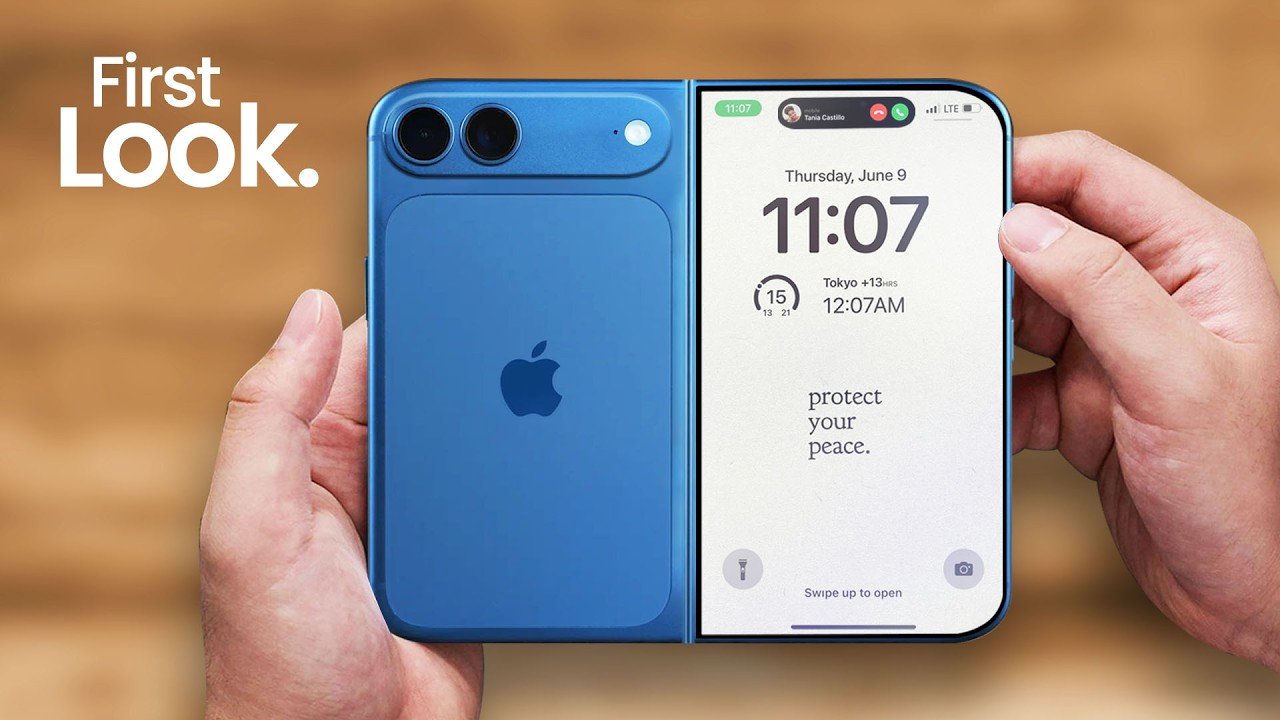
Most reports suggest Apple will launch a book-style foldable first, potentially with a 7.8-inch to 8-inch inner display. The outer display (when closed) may measure around 5.5 inches, similar to the iPhone 13 mini or iPhone SE form factor.
Why book-style? Apple’s ecosystem thrives on multitasking. A larger inner screen would allow side-by-side iPad-style app usage, running two iPhone apps simultaneously, or pairing with a Magic Keyboard for light productivity. A clamshell design, while fashionable, offers less functional advantage for Apple’s software strengths.
Durability and Display Innovations
This is where Apple is expected to differentiate itself. Leaked patents describe:
-
Hybrid hinge design: A combination of interlocking gears and flexible fabric to reduce dust ingress.
-
Self-healing display coating: Microscopic scratches on the foldable screen could disappear under heat or UV light.
-
Crease-free technology: Apple has researched using a series of moving pixels or a variable-tension substrate to eliminate the visible crease entirely.
If these innovations succeed, Apple’s foldable iPhone could launch with a display that feels closer to a solid glass slab than any competing foldable. For users who hate the crease, this alone may justify waiting.
Processor, Battery, and Camera Expectations
By 2026, Apple will likely be on the A20 series chip (or equivalent), built on an advanced 1.4-nanometer or 2-nanometer process. This would deliver:
-
Improved power efficiency to offset the larger display’s energy draw.
-
Hardware-accelerated ray tracing for immersive gaming across the unfolded screen.
-
On-device AI that adapts the interface based on whether the device is folded or unfolded.
Battery life remains a concern for any foldable. Running a 7.8-inch screen consumes significantly more power than a standard 6.1-inch iPhone display. However, Apple’s tight integration between hardware and software could allow dynamic refresh rates dropping as low as 1Hz when reading or viewing static content, preserving charge.
Camera hardware may mirror the Pro series of that time, possibly with a tetraprism telephoto lens. However, foldable devices have less internal space for large camera modules. Do not expect a radical camera upgrade over the iPhone 17 Pro; instead, expect parity.
The Opportunity Cost – What You Give Up by Waiting
Waiting two years for any technology product involves trade-offs. Your current phone might degrade further. You might miss out on features available in today’s iPhones. Let us quantify that cost honestly.
The Case for Buying an iPhone Today (Late 2025 – Early 2026)
If you need a new phone right now, consider these current advantages:
-
Immediate utility: A broken screen, failing battery, or outdated security patches are real problems. Waiting until 2026 prolongs these risks.
-
Mature technology: Today’s iPhone 16 or iPhone 17 (depending on release timing) represents the peak of slab-style smartphone design. The cameras, batteries, and displays are refined over nearly two decades.
-
Lower price: Even the most expensive iPhone Pro Max today costs less than what a first-generation foldable from Apple will command. Expect the 2026 foldable to start at $1,800–$2,000 or more.
-
Software stability: First-generation hardware from Apple sometimes ships with unexpected issues (remember the iPhone 4 antenna or the butterfly keyboard on MacBooks). Waiting for a second or third generation of any new form factor is often wiser.
Who Should Absolutely Wait for Apple’s Foldable iPhone?
Not everyone needs to buy today. Some profiles strongly favor waiting:
-
The satisfied owner of an iPhone 13 or 14: If your current phone still holds a charge, runs the latest iOS, and has no physical damage, you have little urgency to upgrade. Waiting two years is reasonable.
-
The power multitasker: If you constantly find yourself wishing you could run two full apps side-by-side without an iPad, the foldable form factor is genuinely useful. No current iPhone offers that.
-
The early adopter with budget flexibility: Some users simply want the newest, most interesting technology regardless of price. If that describes you, and you can afford potential first-gen quirks, waiting makes sense.
-
Those who dislike the crease intensely: If the visible line on current Samsung or Pixel foldables bothers you, waiting for Apple’s likely crease-minimized solution is rational.
Comparing the 2026 Foldable iPhone to Future Slab iPhones
It would be a mistake to compare the 2026 foldable only to today’s iPhones. By 2026, Apple will also have released the iPhone 18 or even iPhone 19 in traditional slab form. That comparison is more relevant.
Foldable vs. Slab – Which Fits Your Life?
Let us break down daily scenarios:
| Scenario | Apple’s foldable iPhone (2026) | iPhone 18/19 (Slab) |
|---|---|---|
| Reading long articles or PDFs | Excellent – unfolds to near tablet size | Good, but limited by screen width |
| Watching movies | Immersive with black bars reduced | Standard 6.1–6.9-inch experience |
| One-handed use | Thicker and heavier when folded; outer screen may be small | Thin, light, designed for one hand |
| Taking quick photos | Must unfold or use small outer screen for framing | Instant; camera app opens fast |
| Putting in a jeans pocket | Bulkier; may feel tight in slim pants | Effortless |
| Typing long emails | Split keyboard or full landscape keyboard on large screen | Cramped but usable |
| Cost | Likely $1,800+ | $800–$1,200 |
The foldable is not universally better. It is better for media consumption and multitasking. The slab remains better for portability, one-handed use, and value.
Hidden Trade-Offs – Weight, Thickness, and Case Compatibility
Current foldables weigh between 230 and 280 grams. The iPhone 15 Pro Max weighs 221 grams. By 2026, Apple might reduce weight through carbon fiber hinges and titanium frames, but a dual-screen device with a complex mechanical hinge will almost certainly be heavier than a slab.
Additionally, protecting a foldable iPhone is more difficult. Traditional cases won’t work. You will need specialized two-piece cases or hinge covers. Screen protectors for foldable inner displays are notoriously hard to install without bubbles. These are real inconveniences that reviews often overlook.
Software – The Deciding Factor for Apple’s Foldable iPhone
Hardware gets the headlines, but software determines whether a foldable becomes a daily companion or a frustrating gimmick. This is where Apple could win or lose.
How iOS Might Adapt to Folding
Today’s iOS is designed for a single, rigid screen. When you rotate an iPhone, apps reflow. When you split-screen on an iPad, apps resize. But a foldable introduces a third state: transition. What happens when you unfold the device while watching a YouTube video? Does the video seamlessly expand? What if you were typing a message on the outer screen and then open the device? Does the message thread move to the larger display?