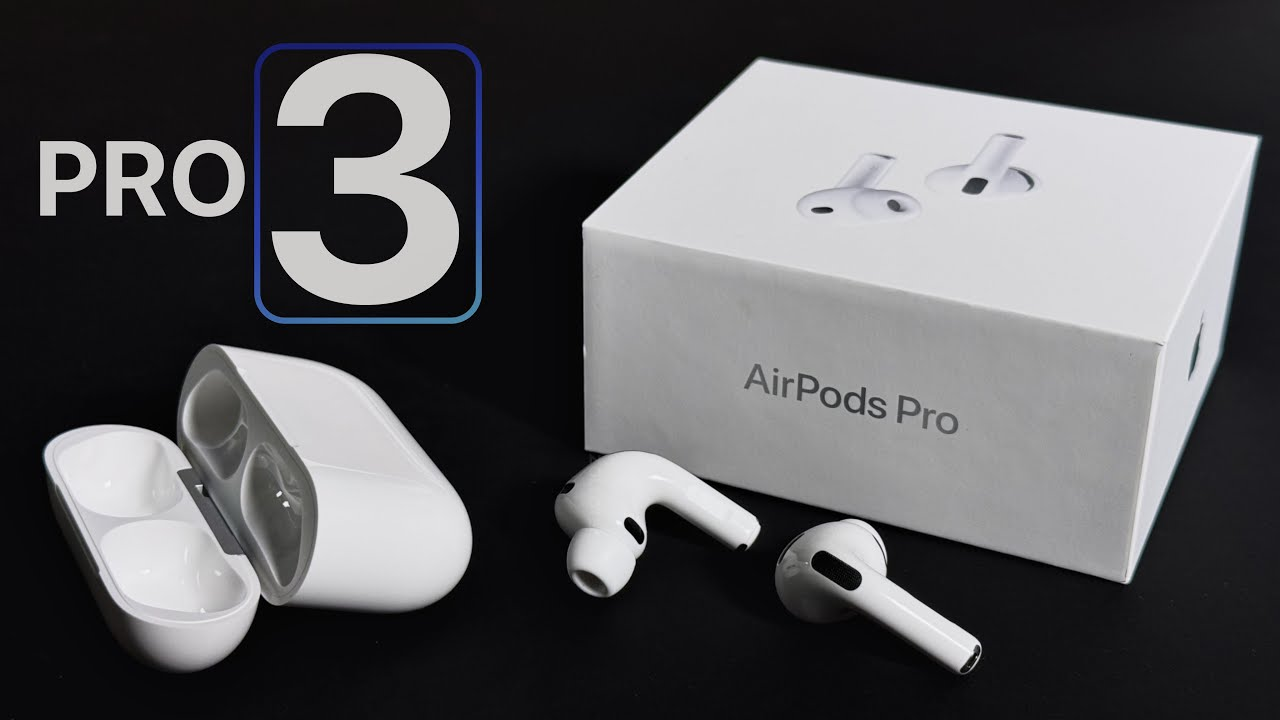
The morning commute in 2026 looks vastly different than it did a few years ago. Trains are filled with passengers wearing sleek, minimalist earbuds, their eyes closed not in fatigue, but in sheer auditory bliss. The device enabling this serene isolation more often than not carries the iconic silhouette of an Apple product. As we move deeper into the decade, the conversation around personal audio has shifted. It is no longer just about listening to music; it is about managing our mental environment, connecting to spatial computing platforms, and prioritizing hearing health. At the center of this conversation sits a compelling question that demands an exhaustive answer: Is the Apple AirPods Pro 3 worth buying in 2026?
Table of Contents
ToggleTo understand the sheer weight of this question, we must first strip away the marketing sheen and look at the rugged, practical reality of daily life. We are living in a time where the line between the physical and digital world is not just blurred; it is actively being erased. We navigate city streets with augmented reality overlays, and we transition from a noisy office to a meditative sound bath with a single tap. The device that facilitates this transition must be flawless. It cannot stutter. It cannot have a latency spike when a critical navigation cue is delivered. It must feel like an extension of the nervous system. This is the promise that the third generation of the AirPods Pro attempts to fulfill. It arrives not merely as a music player, but as a critical interface for the modern human experience. This lengthy exploration will dissect every component of this device, from the materials hugging your ear canals to the computational audio algorithms rewriting the physics of sound, to determine if your hard-earned savings should be exchanged for this tiny piece of hardware.
The Evolution of an Icon: Tracing the Pro Lineage
Before we can judge the present, we must respect the past. The original AirPods Pro shattered the market by successfully miniaturizing active noise cancellation without sacrificing comfort. They were a revelation, but like all pioneers, they were imperfect. The first generation suffered from occasional crackling issues and a battery life that degraded rapidly under heavy use. Then came the second generation, the Apple AirPods Pro 2, a refinement that bordered on a complete overhaul. It introduced the H2 chip, a silicon brain so powerful it redefined what dynamic noise cancellation could be. It added Adaptive Transparency, a feature that felt like a superpower, reducing the sharp pain of a jackhammer while letting conversation flow through effortlessly. The charging case found its voice with the U1 chip and a built-in speaker, bidding farewell to the abyss between couch cushions.
For two years, the second generation stood as the undisputed king of the hill. Competitors released “killers” every quarter, yet none could replicate the symbiotic harmony between the hardware and the iOS ecosystem. Now, in 2026, we are holding the heir to that throne. The Apple AirPods Pro 3 enters a market that is not just hungry for a new gadget, but desperate for meaningful innovation. Users are fatigued by iterative updates. They want a leap. They want to feel the same spark of impossibility they felt when they first activated Transparency mode and thought the headphones had fallen out of their ears. Does the new generation deliver this jolt, or is it a gentle, complacent nudge forward? The answer lies in the microscopic engineering and the rethinking of what an earbud is supposed to do for your health.
Unboxing the Unseen: Design Philosophy and Material Science
At first glance, the silhouette of the Apple AirPods Pro 3 appears familiar—perhaps too familiar to the untrained eye. The iconic stem, shorter than the original but present nonetheless, remains the primary interaction zone. However, to call the design “the same” is to misunderstand the philosophy of Apple’s industrial design team. They do not design for the eye; they design for the ear. The geometry of the new earpiece has undergone a nanoscopic transformation. Computational fluid dynamics were employed not just for wind noise reduction, but for thermal comfort. One of the unspoken truths about in-ear monitors is the “hot ear” syndrome, a sweaty fatigue that sets in after hours of continuous wear. The Pro 3 tackles this with a micro-ventilation system that circulates air without compromising the acoustic seal.
The finish is a masterclass in tactile alchemy. Gone is the glossy, slippery plastic that graced the first generation. In its place is a matte, slightly textured surface that catches the light like a morning frost. This texture, achieved through a laser-etching process, provides a subtle grip for fingertips damp from rain or a workout. The sensory experience is paradoxical; it feels soft and hard simultaneously. The weight, distributed with surgical precision, makes the earbuds disappear into the cartilage of the outer ear within minutes. This “vanishing act” is the highest compliment you can pay a wearable. If you can feel it resting, it has failed. If you forget it is there during a three-hour flight, the design has triumphed.
The ear tips have also seen a revolution, moving beyond the standard silicone of the past. The third generation introduces a hybrid memory foam core wrapped in a medical-grade, non-porous silicone skin. This innovation, which Apple holds a specific patent for, achieves the holy grail of in-ear audio: the passive isolation of foam with the cleanliness and longevity of silicone. They don’t collect wax, they don’t degrade with skin acidity, and they mold to the unique asymmetry of your ear canal within seconds of body heat activation. The packaging includes a new “XS Plus” size, acknowledging the vast diversity of ear shapes that standard sizing charts ignore. This attention to anatomical diversity is crucial, because the performance of the entire computational audio system hinges on a perfect, verified seal.
The H3 Chip: The Limbic System of the Device
If the exterior is the body, the H3 chip is the brain and central nervous system of the Apple AirPods Pro 3. The H2 was a beast of computational burden, but the H3 is a paradigm shift. It moves beyond reactive signal processing into predictive adaptive learning. This is not a buzzword; it is a functional reality. The chip builds a real-time 3D mesh of the ear’s internal geometry using sub-audible sonar-like impulses. It maps the precise volume and reflective characteristics of your ear canal and compensates for the acoustic impedance mismatch that occurs when sound waves travel from a hard driver to a soft, biological membrane.
This results in a phenomenon Apple engineers call “Phantom Source Rendering.” When you listen to a lossless track, the H3 calculates not just the frequency response, but the temporal phase accuracy required to make the music sound like it is originating from a point in space two meters in front of you, not inside your skull. The “in-your-head” localization, a typical plague of headphone listening, is finally and convincingly shattered. It tricks the brain into believing the soundstage is external, reducing listening fatigue and creating a profound sense of space.
The neural engine embedded within the H3 is trained on millions of hours of real-world audio data. It can distinguish between the specific harmonic profile of a crying infant and the sudden screech of train brakes. It can attenuate one while safely passing through the other. This intelligent situational awareness means the noise control algorithms feel less like a blanket muffling and more like a surgical scalpel, carefully editing the unwanted sounds out of your reality while preserving the fidelity of the desired ones.
A New Standard in Acoustics: The Dual-Driver Breakthrough
The physical driver architecture has been completely re-engineered to feed on the massive power of the H3 chip. Previous generations relied on a single, highly capable, custom high-excursion driver. The Apple AirPods Pro 3 adopts a dual-driver array squeezed into an impossibly compact enclosure. This is not a simple tweeter-and-woofer setup; it is a coaxial arrangement where a high-frequency polymer ring radiator surrounds a titanium-dome mid-bass driver.
The separation of labor allows for transient perfection. The titanium dome handles the snap of a kick drum and the pluck of a cello string with lightning speed and zero distortion, because it no longer has to vibrate slowly to produce bass. Simultaneously, the ring radiator delivers crystalline highs that extend far beyond the human hearing threshold, creating the air and “breath” around instruments that audiophiles chase relentlessly. The crossover between these two drivers is handled entirely in the digital domain by the H3 chip, creating a seamless, phase-coherent wavefront that acts like a single, ideal piston. The result is a frequency response curve that is not just flat, but contextually dynamic. The tuning shifts subtly depending on the volume level, based on the Fletcher-Munson curves of human hearing perception. At low volumes, the bass and treble are gently elevated to maintain the richness of the music. As volume increases, the curve relaxes back to a reference neutral state. This ensures the music sounds “alive” regardless of how responsibly you listen.
Silence Refined: Active Noise Cancellation in the Real World
The pure efficacy of Active Noise Cancellation is no longer the competitive battleground it once was, simply because the Apple AirPods Pro 3 has shifted the goalposts. Noise cancellation is measured in two vectors: depth and texture. Depth is how many decibels of noise are removed; texture is how natural the remaining silence feels. Old ANC generated a vacuum-like pressure on the eardrums, a sensation that could induce nausea. The Pro 3 introduces a “Pressure Relief Labyrinth” within the acoustic cavity. This micro-channel structure allows for static pressure equalization while still blocking low-frequency mechanical roar.
On a flight, the drone of the engines does not just diminish; it ceases to exist as a tangible presence. The device cancels noise in real-time at a sample rate of 64,000 times per second. It focuses heavily on the low-frequency bands (20-400Hz), which constitute the rumble of traffic and machinery, but its reach now extends deeply into the mid-range, a territory previously reserved for bulky over-ear headphones. A nearby conversation in a coffee shop is reduced to a ghostly, unintelligible whisper, not a muffled mumble. This allows you to work in silence without needing to blast high-volume masking music, protecting your long-term hearing.
Adaptive Transparency is the true star of the show. In the Apple AirPods Pro 3, it feels clairvoyant. The system detects patterns, not just peaks. If a construction site has a rhythmic hammering, the algorithm locks onto the cadence and applies a dynamic notch filter to soften the impact transients while maintaining the flow of ambient city sound. Walking near traffic is safer than ever, because the engine separates the Doppler effect of a passing vehicle—estimating its speed and trajectory—and ensures it cuts through the sonic landscape clearly, even while music is playing. It is an augmented reality for your ears that works on a subconscious level.




The Wellness Revolution: A Computer for Your Ears
The most profound justification for the purchase price in 2026 lies not in music, but in medicine. The Apple AirPods Pro 3 has been officially cleared by health authorities in multiple regions as a clinical-grade hearing aid device for perceived mild-to-moderate hearing loss. This is the ultimate “Trojan horse” strategy. A device worn for music and calls is now a medical instrument that breaks down the stigma of traditional hearing aids.
The setup process involves a personalized hearing profile created via a tone-audiometry test administered directly on the paired device. But it goes further than a standard hearing test. It measures your “hidden hearing loss”—the ability to distinguish speech in a noisy environment, which is a separate metric from pure-tone sensitivity. Once configured, the earbuds apply a dynamic gain prescription that compensates for your specific deficiencies, only in the channels where you need it. The transparency mode becomes a customized sound field, boosting the specific frequencies of a conversation partner’s voice without making the background hiss annoyingly loud.
Furthermore, the health sensors have expanded. The optical sensors now monitor cochlear health by measuring faint otoacoustic emissions—tiny sounds the inner ear generates in response to stimulus, which are a biomarker of auditory vitality. The device can warn you if your cochlea is experiencing temporary stress before it becomes permanent damage, actively suggesting you lower the volume or take a break. This transforms the earbuds from a potential liability for your hearing into a guardian of it. For anyone concerned about the long-term effects of living with headphones on, this feature provides a peace of mind that is genuinely priceless.
Spatial Computing and the Zero-Lag Promise
The adoption of the Vision Pro ecosystem and the broader acceptance of augmented reality glasses have redefined the role of audio. The Apple AirPods Pro 3 features the third generation of the Ultra-Wideband radio, achieving a range precision of one centimeter. When paired with a spatial computing headset or even just your camera-equipped tablet, the audio anchors to the visual environment with unnerving stability.
Imagine painting a virtual canvas on your wall. The sound of the brush stroke emanates precisely from the paint’s position. If you turn your head, the audio world stays glued to the room, not your ears. This geometric anchoring is powered by the H3’s ray-tracing audio engine. It simulates the reflectivity of the materials in your room—glass, carpet, wood—based on a rapid sonar scan performed by the earbuds’ microphones. The sound is not just spatial; it is environmentally aware. For gaming, this creates a “wall hack” level of spatial awareness, allowing you to track footsteps and environmental cues with a three-dimensional precision that wired systems cannot match, because they lack the head-tracking and room-mapping feedback loop. The latency, measured at a staggering 8 milliseconds on Apple Silicon devices, is the lowest of any fully wireless connection, making voice chat and real-time monitoring during content creation absolutely viable.
The Daily Rigor: Connectivity and Battery Fortitude
In the rough and tumble of daily use, stability trumps fancy features. The seamless switching between an iMac, a foldable, and a wrist-worn device is a feature that competitors have tried to emulate for years but have never truly solved. For the Apple AirPods Pro 3, this handoff is governed by an iCloud-based predictive logic. The devices know which screen you are looking at—thanks to attention awareness APIs—and route the audio accordingly. If a notification comes in, the audio source dips, and you can accept the call with a simple head nod, detected by the motion accelerometers and gyroscopes. This hands-free interaction is crucial for professionals who move between workstations constantly.
Battery life has seen a significant boost, driven by a stacked cell architecture that packs more milliampere-hours into the same stem cavity. The buds themselves deliver 8 hours of continuous playback with ANC active, a figure that represents a 33% increase over the previous model. The charging case, which has shed its sharp edges for a slightly more rounded, organic pebble shape with a reinforced hinge, provides an additional 28 hours of reserve. Fast charging remains magical: a 7-minute stint in the case provides a solid two hours of listening.
The charging ecosystem is where subtle complexity emerges. The case supports Qi magnetic charging, puck charging, and has a dedicated metal contact for direct tethering to a device’s USB-C port for emergency power sharing. However, the true innovation is in the case’s own interface. It now features a high-resolution, always-on mini-display that supports gestures. You can swipe to check battery percentages for the left, right, and case independently. You can pinch to switch between noise cancellation modes without needing the connected device nearby. It solves a very specific, modern frustration: connecting your earbuds to a running watch or a non-Apple device without pulling out your primary phone. This little screen makes the earbuds a standalone platform, not just a reactive accessory.
Voice Clarity and the Professional Persona
In the era of remote work, your voice is your professional presence. The acoustic architecture of the Apple AirPods Pro 3 is designed to make you sound like you are in a treated podcast studio, even if you are in a busy airport terminal. The voice isolation algorithm has been dramatically upgraded. The onboard beam-forming microphones triangulate the precise location of your mouth using bone conduction sensors and skin vibration accelerometers placed near the ear tip. When you speak, the system ignores all audio except the vibrations traveling through your skull tissue.
The algorithm, called “Vocal Clarity AI,” rebuilds your voice in real-time. It identifies the fundamental frequency of your laryngeal vibration and separates it from wind buffet, street sweepers, and crowd chatter. Even if you are whispering to avoid disturbing a coworker in a quiet carriage, the receiving end hears a full, articulate voice. The earbuds fill in the missing acoustic energy that a whisper lacks, synthesizing the consonants that get lost in hushed speech. For content creators, the Pro 3 can stream 24-bit/48kHz lossless audio directly to Final Cut Pro, serving as a high-fidelity lavalier microphone replacement. This dual use as a listening device and a broadcast-quality input tool adds significant value to the buying decision for anyone producing podcasts or video essays.
The Competitive Context and the Value Equation
To answer the central question—Is the Apple AirPods Pro 3 worth buying in 2026?—we must look at the landscape. The market is not devoid of excellent alternatives. High-resolution contenders exist with exotic driver materials and reference tuning. Fashion-focused luxury brands offer audio jewelry with mediocre connectivity. However, no other product manages to fuse the medical hearing aid transparency, the spatial computing anchor, the computational audio pipeline, and the zero-friction ecosystem integration into a single, pocketable object.
The cost of entry is undeniably high. But when deconstructed, the price includes a high-resolution dual-driver IEM system, a clinical hearing aid, a spatial audio computer, a professional voice microphone, and a 36-hour battery system. Purchased as separate, specialized devices, this suite of capabilities would cost five times the asking price and would be an ergonomic nightmare to juggle. The value proposition is not about a single killer feature; it is about the density of high-performance capabilities that cater to work, wellness, travel, and entertainment with equal proficiency.
A Small Critique and Ethical Considerations
No review is complete without acknowledging the shadows. The repairability of the Apple AirPods Pro 3 remains near zero. They are essentially sealed miracles of miniaturization that, once the battery chemistry degrades after years of service, become e-waste. Apple’s recycling program is robust, but the inability to simply pop in a new battery is a sustainability flaw that looms larger with each passing generation. Furthermore, the profound effectiveness of the noise cancellation and isolation requires a societal conversation about awareness. The “superhuman” hearing of the Transparency mode can falsely reassure users that they are fully present, yet the cognitive load of processing digitally reconstructed reality is still a step removed from genuine natural hearing. Users must consciously choose to remove the earbuds entirely to remain grounded, resisting the temptation to live entirely behind the digital veil.
The Verdict: The Daily Essential
After thousands of words dissecting the silicon, the acoustics, and the sensor fusion, we return to the human element. The Apple AirPods Pro 3 is worth buying in 2026 if you view audio not as a background distraction, but as a primary interface for navigating the world. It is a device that respects the fragility of your hearing while expanding the boundaries of your sound stage. It disappears into your ears not just physically, but cerebrally, becoming a transparent layer between your consciousness and the cacophony of the city.
The transition from listener to cyborg is happening, but it is not cold and metallic. It is warm, tuned, and protected. The third generation represents the maturity of the “computational audio” era. It fixes the wireless compression ceiling, anchors you safely in space, and actively guards the biological instruments you depend on—your ears. If you own the first generation and have been waiting for a sign, the leap is monumental. If you own the second generation, the wellness features and the externalized soundstage may feel like a luxury, but one that genuinely upgrades your quality of life. It is not just an upgrade; it is a long-term investment in your sonic health and productivity. The sound of 2026 is clear, intelligent, and deeply personal. The Apple AirPods Pro 3 is simply the most refined conduit to experience it.