

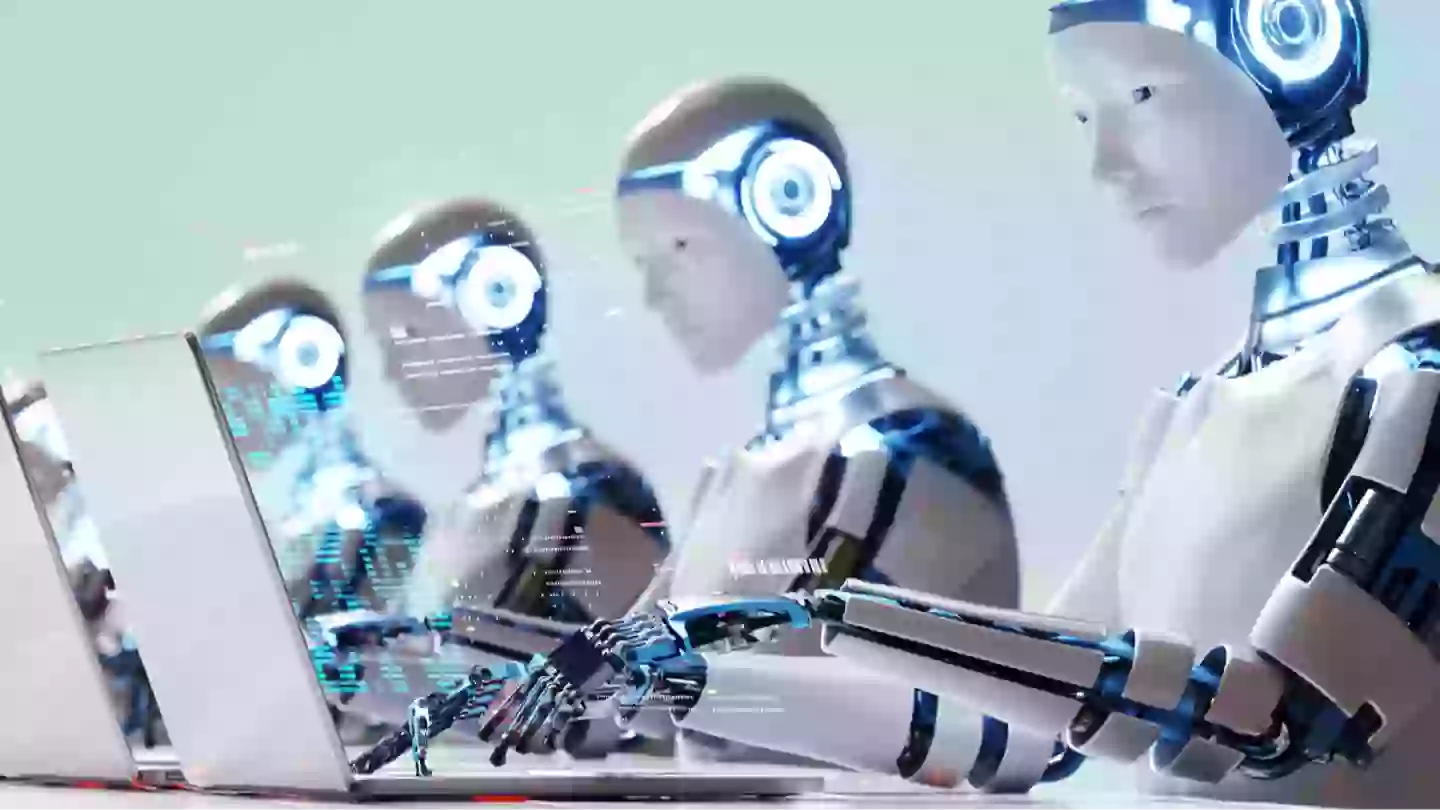
In an age where artificial intelligence (AI) is rapidly evolving and transforming entire industries, the question on many people’s minds is: whose job is safe from AI? The automation of tasks once thought to be the exclusive domain of human labor — from driving and customer service to content creation and even legal analysis — has ignited anxiety across the global workforce. But while AI poses undeniable disruption, there remain roles, sectors, and human qualities that are far more resistant to replacement.
This article delves into the professions and domains that are likely to remain secure — or even thrive — in the era of artificial intelligence.
1. Jobs Requiring Deep Emotional Intelligence
While AI is becoming proficient at simulating human interaction, it still lacks genuine empathy and emotional nuance. Occupations centered on human connection — such as therapists, psychologists, social workers, and nurses — are deeply rooted in the ability to read body language, understand subtle emotional cues, and build meaningful trust. Machines can assist with diagnostics or provide behavioral data analysis, but they cannot replace the authentic human presence that is central to healing and support.
Similarly, teachers, especially in early education, fall into this emotionally intelligent category. A child’s learning is not just about the transfer of knowledge but also about guidance, encouragement, and emotional support. AI tutors may supplement learning, but they cannot replicate the human bond and mentorship that educators provide.
2. Creative Professions (With a Caveat)
AI can generate music, write poems, and produce visual art, but the spark of true creativity — originality, cultural relevance, and emotional depth — remains uniquely human. Writers, filmmakers, fashion designers, painters, choreographers, and performers express lived experience, imagination, and personal vision in ways that algorithms cannot truly emulate.
That said, creatives will need to evolve. AI will become a co-pilot in the creative process — streamlining editing, generating drafts, or suggesting variations. The professionals who thrive will be those who leverage AI tools while pushing the boundaries of human expression and authenticity.
3. Skilled Trades and Hands-On Jobs
Electricians, plumbers, carpenters, mechanics, and HVAC technicians perform tasks in unpredictable physical environments that require dexterity, spatial reasoning, and real-time problem-solving. While AI-powered robots are being developed to mimic human movement, they struggle with the chaotic, unstructured reality of a job site.
Installing or repairing a heating unit in a cramped attic or diagnosing a complex issue under a sink are challenges that require intuition, adaptability, and years of experience. These professions remain grounded in physical skill and improvisation — qualities that machines have not yet mastered.
4. Leadership and Strategic Roles
Executives, entrepreneurs, and senior managers often work in environments where uncertainty, intuition, and high-stakes judgment calls define the job. While AI can analyze data and forecast outcomes with remarkable precision, it cannot grasp context, moral dilemmas, or company culture.
CEOs, strategists, diplomats, negotiators, and policy makers make decisions based on shifting landscapes, human factors, and geopolitical considerations. Leadership also demands charisma, vision, and the ability to inspire — traits that lie outside the realm of automation.
5. Healthcare Practitioners (Human-Centered Roles)
Surgeons, despite AI’s growing capabilities in diagnostics and robotic assistance, remain largely irreplaceable in the operating room. Performing intricate procedures in high-pressure environments, dealing with anatomical differences between patients, and making snap decisions based on live feedback are tasks better handled by trained humans.
Primary care physicians, nurses, physical therapists, and paramedics bring both medical expertise and human compassion. While AI tools can enhance diagnosis and treatment planning, the physical, emotional, and ethical aspects of patient care require a distinctly human touch.
6. Professionals in Ethics and Law
As AI grows more pervasive, the need for ethicists, legal scholars, and policy advisors will intensify. These professionals will be tasked with guiding the moral and legal frameworks that govern the deployment of AI technologies. Evaluating questions about bias, accountability, and human rights cannot be left to machines.
Moreover, legal interpretation, courtroom persuasion, and advocacy involve understanding human psychology, context, and societal impact. AI may support legal research or draft documents, but the art of legal reasoning and litigation remains human-centric.
7. Jobs in Unpredictable or Novel Environments
AI functions best in structured settings where data is abundant and environments are controlled. It struggles with chaos, novelty, and incomplete information. Roles that exist in rapidly changing, poorly defined, or high-risk environments — such as emergency responders, disaster relief workers, search-and-rescue teams, and military personnel — require quick thinking, adaptability, and bravery.
These roles often deal with unique, high-stakes situations that machines are ill-equipped to handle without human oversight.
8. Artisan and Heritage Professions
In a world dominated by mass production and algorithms, human-made craft is seeing a revival. Artisans, luthiers, blacksmiths, textile weavers, and glassblowers offer a tactile, tradition-rich experience that consumers increasingly value. These jobs blend history, skill, and personal expression in a way that automation cannot reproduce.
Customers seeking authenticity and human connection are willing to pay a premium for handcrafted goods, ensuring the survival of these time-honored trades.
9. Jobs in AI Development and Maintenance
Ironically, one of the safest fields in the face of AI disruption is AI itself. Machine learning engineers, data scientists, robotics experts, and AI ethicists are in high demand as the technology advances. These professionals design, train, maintain, and refine the systems that drive automation.
While some parts of coding can be automated, the architecture of AI systems, troubleshooting, and ethical supervision require human expertise — particularly for complex, mission-critical applications.
10. Roles Demanding Human Trust
Trust is a uniquely human currency, and it plays a huge role in fields like religious leadership, counseling, coaching, diplomacy, mentoring, and customer relationship management. People are far more likely to trust someone with shared values, cultural background, and emotional intelligence.
Even if AI delivers results more efficiently, trust-based jobs will resist full automation. When the stakes involve personal well-being, faith, or long-term goals, human connection remains vital.
Conclusion: AI as a Tool, Not a Replacement
The emergence of AI will undoubtedly reshape the job market, but it won’t result in universal obsolescence. Instead, it will change the nature of work. Jobs that combine emotional intelligence, complex human judgment, creativity, and physical dexterity remain secure — at least for the foreseeable future.
The safest path forward is adaptability. Those who embrace AI as a tool, learn how to collaborate with it, and focus on inherently human strengths will find themselves not only safe, but indispensable.
